



The livestock industry has always searched for ways to make feed easier to manage.
Forage is nutritionally important, but its physical form can create logistical challenges. Hay bales require storage space and machinery for handling. Loose forage can be difficult to measure accurately. Long fibers may also make automated feeding more complicated.
Pelletizing offers an alternative.
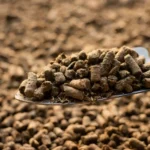
Instead of storing large volumes of loose or baled forage, producers can process suitable materials into compact pellets.
Among the different forage resources available, alfalfa is particularly interesting because of its established role in animal nutrition.
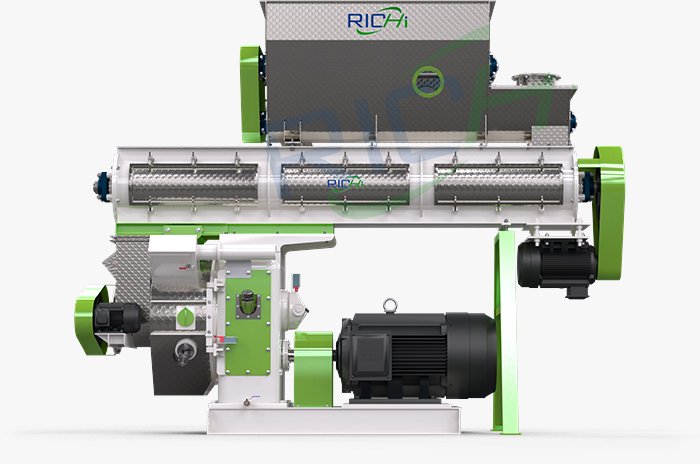
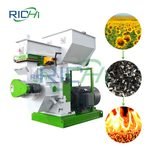
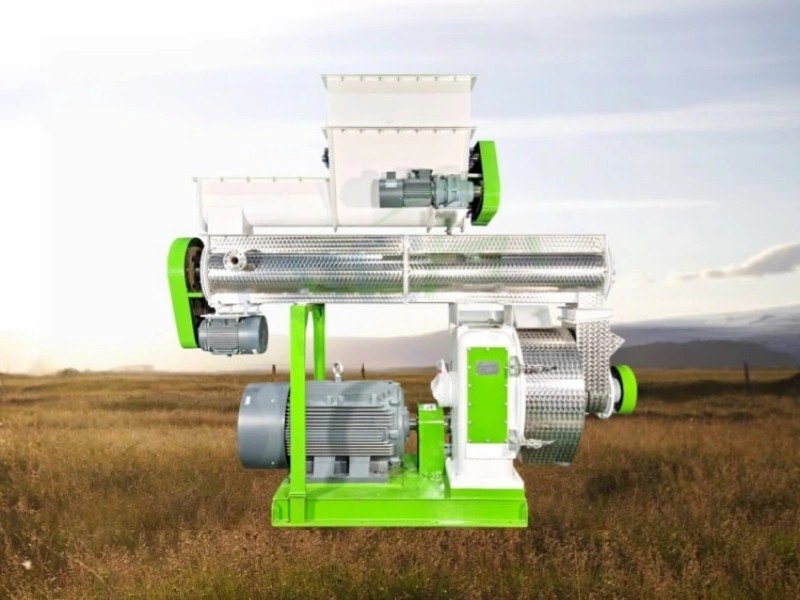
For companies exploring this opportunity, an alfalfa pellet machine for sale can be the central processing unit in a small farm-based operation or a much larger commercial feed project.
The Real Problem Is Often Logistics
When people discuss livestock feed, nutrition is usually the first subject.
But logistics can be just as important.
Imagine a dairy farm receiving hundreds of tons of forage each year. Every ton must be harvested, transported, unloaded, stored, protected, and eventually delivered to animals.
The physical characteristics of the feed influence every stage.
Baled hay can be efficient compared with completely loose forage, but it still requires substantial storage and handling.
Pellets provide another format.
Their uniform shape allows them to move through hoppers, conveyors, bins, and other handling systems more easily.
This can make them attractive for operations looking to improve feed logistics.
Why Alfalfa Works Well in a Pellet System
Alfalfa is a fibrous forage that can be processed after appropriate drying and size reduction.
The plant structure also allows it to form cohesive pellets under suitable mechanical conditions.
However, not all alfalfa behaves identically.
Factors such as harvest maturity, moisture, fiber content, particle size, and storage conditions can affect pelletizing performance.
This means the same machine may require different operating conditions for different batches.
A commercial operation should therefore establish a consistent raw material preparation process.
A Different Approach to Hay Management
Traditional hay management generally follows this pattern:
Harvest → Dry → Bale → Store → Transport → Feed
A pellet-based approach may look more like:
Harvest → Dry → Chop → Grind → Pelletize → Cool → Store → Feed
The second route requires additional processing equipment, but it creates a very different final product.
The producer exchanges bulky forage for a more standardized feed format.
Whether this is economically worthwhile depends on scale and market conditions.
What Capacity Makes Sense?
Production capacity should be connected to the amount of forage available.
A small farm may only need a few hundred kilograms per hour.
A feed manufacturer serving multiple livestock operations may need several tons per hour.
A 2-3 T/H hay pellet mill for sale may suit some medium-scale forage processing projects where the available hay supply and customer demand can support that throughput.
But capacity should never be selected in isolation.
Consider the entire production chain.
If the grinder can only supply 1.5 tons per hour, a 3-ton-per-hour pellet mill will not automatically create a 3-ton-per-hour plant.
Similarly, if the packaging system cannot handle the pellet mill’s output, finished product may accumulate.
The smallest bottleneck can determine the practical capacity of the entire facility.
What Is the Role of Grinding?
Grinding helps transform long forage fibers into particles that are easier to feed into the pellet mill.
The correct particle size depends on the raw material and equipment.
Too large, and feeding may become unstable.
Too fine, and grinding energy can increase unnecessarily.
The objective is therefore controlled size reduction.
This is one reason forage pellet projects should evaluate the complete material preparation system rather than purchasing the pellet mill first.
Why Cooling Should Not Be Ignored
Fresh pellets leave the pellet mill at elevated temperatures.
They may also contain more internal moisture than the final storage condition requires.
Cooling allows the pellets to stabilize before they enter storage or packaging.
A properly sized cooling system can help protect pellet quality and prevent excessive heat accumulation in storage.
For commercial production, cooling capacity should be matched with pellet output.
What Does Screening Achieve?
Not every pellet leaving the mill will have identical physical quality.
Some fines and broken particles may be generated during production.
A screener can separate these materials from the finished pellets.
The fines can potentially be returned to the production process where appropriate.
This improves product appearance and creates a more uniform commercial product.
For feed manufacturers selling packaged pellets, this stage can have an important influence on customer perception.
From Farm Equipment to Feed Manufacturing
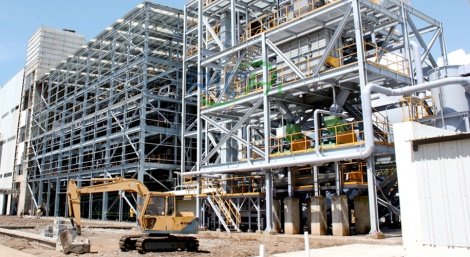
There is a major difference between producing pellets for internal farm use and operating a commercial feed factory.
A farm-based system may prioritize simplicity.
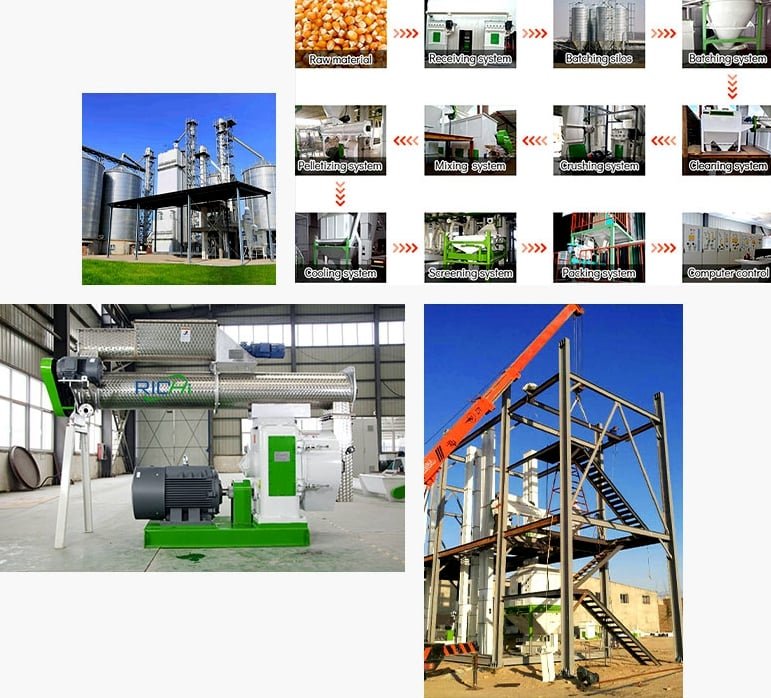
A commercial factory may require:
- Automatic weighing
- Multiple ingredient bins
- Mixing
- Grinding
- Pelletizing
- Cooling
- Screening
- Packing
- Warehouse management
The latter is closer to a complete feed manufacturing operation.
Businesses planning such projects may compare different industrial animal feed equipment for sale based on capacity, automation, raw materials, and product requirements.
Could Alfalfa Pellets Be Used in Mixed Feed?
Yes, depending on the formulation.
Alfalfa pellets can be used as a forage component or incorporated into broader feed formulations.
This opens an interesting possibility for feed manufacturers.
Instead of selling alfalfa pellets as a standalone product, a company may use processed alfalfa as one ingredient in complete feed.
The exact formulation depends on the target species and nutritional objectives.
The machinery must therefore be compatible with the complete feed process if multiple ingredients will be handled.
The Business Case for Regional Feed Production
Transportation is an important factor in feed economics.
A local feed manufacturer located near forage-producing regions may have an advantage because raw material transportation distances can be shorter.
At the same time, finished pellets can be transported more efficiently than loose forage.
This creates a potentially useful combination:
Local forage supply + local processing + standardized product + regional distribution
Such a model can be particularly interesting where livestock farms are concentrated within a relatively small geographic area.
What Should Buyers Ask an Equipment Supplier?
A machine quotation is only the beginning.
Buyers should ask practical questions.
For example:
- What raw material condition was used for the capacity estimate?
- What moisture range is recommended?
- What pellet sizes can be produced?
- What supporting equipment is necessary?
- What electricity supply is required?
- How often do major wear parts need replacement?
- Can the system process other forage materials?
- What level of automation is available?
- How much floor space is required?
These questions can reveal differences between seemingly similar equipment proposals.
How Does Automation Affect Labor?
At small scale, manual operation may be acceptable.
As capacity increases, however, material handling becomes more demanding.
Automation can help control feeding, conveying, cooling, screening, weighing, and packaging.
The goal should not be automation for its own sake.
Instead, automation should address specific operational challenges.
For example, automatic feeding can improve consistency, while automatic packing can reduce repetitive labor.
The ideal level depends on labor costs and project scale.
Maintenance and Long-Term Reliability
A pellet mill operates under significant mechanical load.
The die and rollers are wear components.
Grinding equipment also requires routine maintenance.
Conveyors, bearings, motors, and other components need inspection.
A reliable production plan therefore includes maintenance schedules and spare parts.
For farms, downtime during peak harvesting periods can be particularly costly.
For commercial manufacturers, equipment downtime can interrupt customer deliveries.
Reliability should therefore be considered alongside initial purchase price.
Storage: The Last Part of the Process
A pellet plant can produce excellent feed and still lose quality through poor storage.
Finished pellets should be protected from excessive moisture.
Warehouses should remain clean and dry.
Bulk storage systems should be designed for easy loading and unloading.
Bagged products should be stacked in a way that allows air circulation and inventory rotation.
The storage design should also reflect expected production volume.
Is Pelletizing Suitable for Every Farm?
No.
For a small farm with inexpensive local hay and simple feeding requirements, conventional forage may remain the most economical option.
Pelletizing becomes more interesting when there is a clear reason to change the physical form.
For example:
- Storage space is limited
- Feed must travel long distances
- Automated feeding is desired
- A commercial feed product is being developed
- Large volumes of forage need standardized handling
- Existing forage residues need higher-value utilization
The technology should solve a real problem.
A More Efficient Way to Think About Feed
The future of livestock feeding will not necessarily be determined by one specific feed format.
Instead, producers will continue comparing nutrition, cost, storage, labor, transportation, and animal requirements.
Pellets can be one useful option within that broader system.
Businesses considering forage processing can look at this website for additional technical information during the early research stage, but equipment decisions should ultimately be based on raw material testing and project economics.
The most important lesson is simple:
Pelletizing is not merely about pressing hay through a die.
It is about changing the way forage moves through the entire supply chain—from field to factory, from factory to warehouse, and from warehouse to animal.
When that complete chain is considered, alfalfa pellets can become much more than a convenient feed format. They can become part of a more organized and scalable livestock feed system.