

If you have been looking into processing chicken manure, you have probably noticed something confusing. Some people talk about pellets. Others talk about granules. The words are often used interchangeably, as if they mean the same thing. They do not. And the difference matters—not just for the equipment you buy, but for the customers you sell to and the price you can command.
I learned this the hard way a few years ago when I visited a poultry farm that had just installed a processing line. The owner was proud of his setup. He walked me through the dryer, the grinder, and the pellet mill. The pellets coming out the end were uniform and dense. He bagged them and stacked them in the warehouse. Then he told me he was having trouble selling them.
The problem was not the quality. The pellets were excellent. The problem was the market. He had designed his entire operation around pellets, but his local customers—vegetable growers and landscapers—wanted granules. They wanted something that would break down faster in the soil and blend more easily with other inputs. He had spent a lot of money on equipment that made the wrong product for his market.
That experience taught me something important. Before you buy any equipment, you need to understand the difference between pellets and granules. You need to know which one your market wants. And you need to choose your equipment accordingly.
What Is the Difference?
Pellets and granules are both made from the same raw material—dried, ground chicken manure. But they are formed in different ways, and that changes their physical properties.
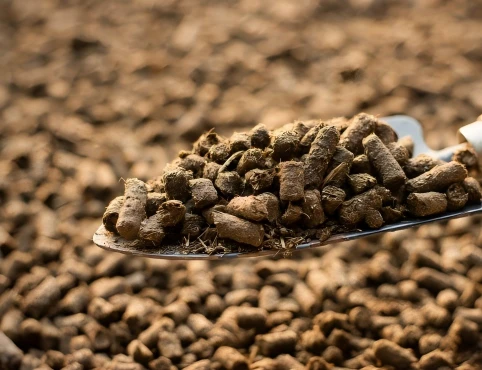
Pellets are made by forcing material through a die under high pressure. The friction generates heat, which melts the natural lignin and binds the particles into a dense, cylindrical shape. Pellets are hard, smooth, and uniform. They are slow to break down in soil. They release nutrients gradually over time. They flow well through spreaders and feeders. They store well and transport well.
Granules are made by tumbling material in a drum or on a disc while moisture and binders are added. The particles stick together and grow into round, irregular shapes. Granules are softer and more porous than pellets. They break down faster in soil. They blend more easily with other ingredients. They are often preferred for organic fertilizer blends and for applications where quick nutrient release is desired.
Both products have their place. Both have markets. The question is which one your operation should be making.
The Equipment Difference
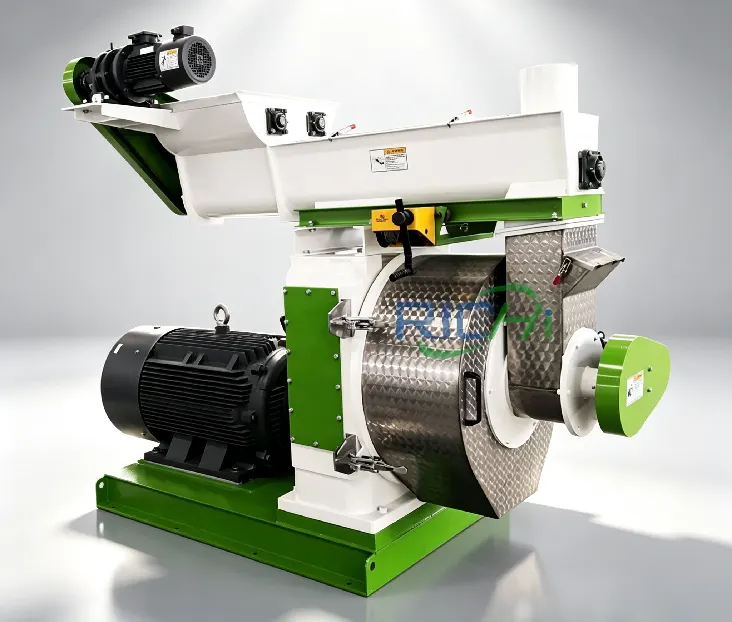
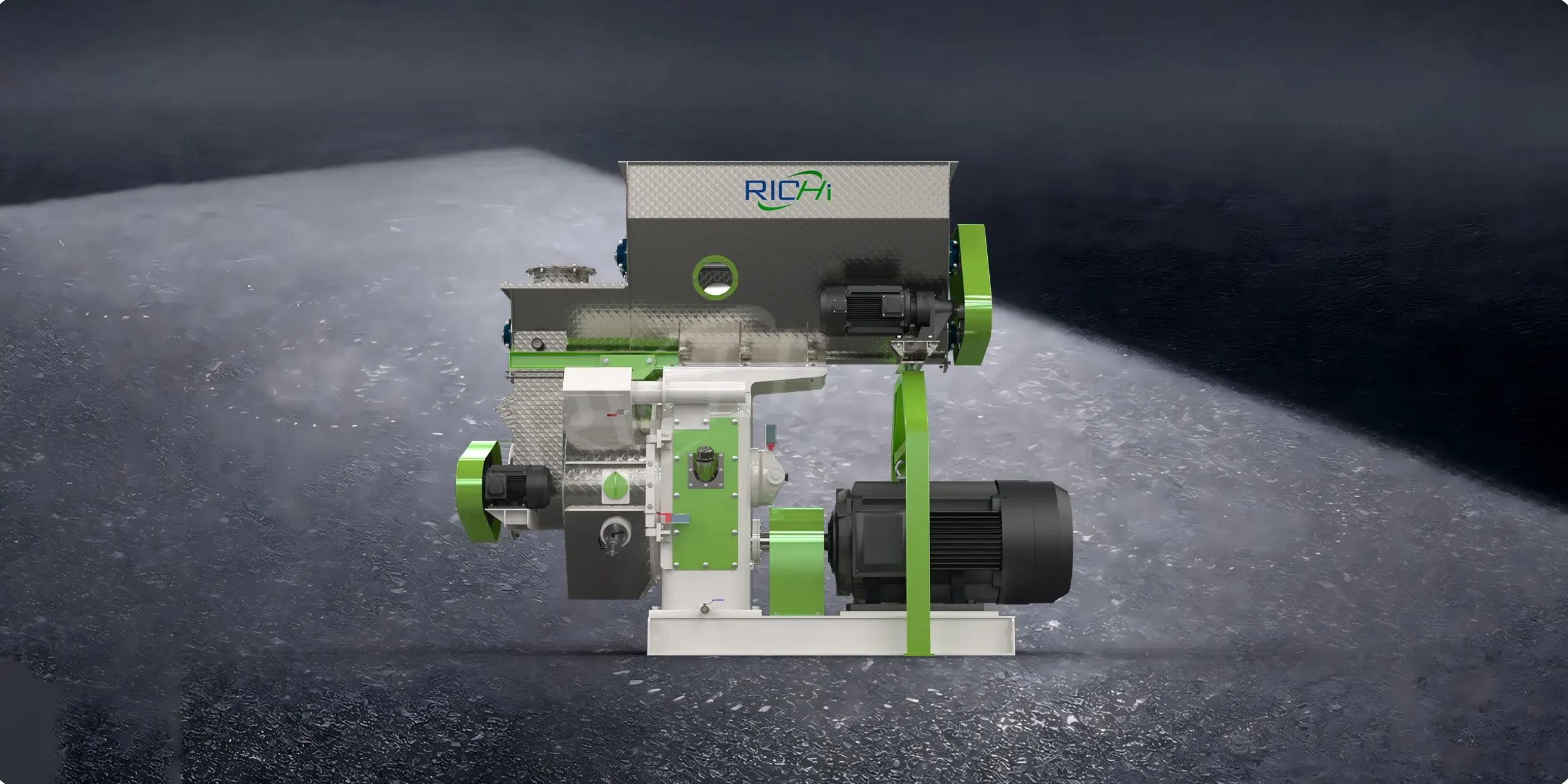
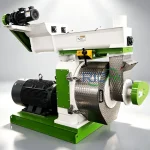
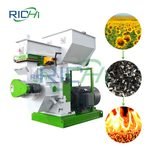
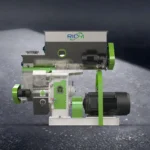
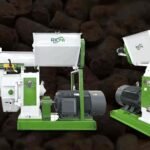
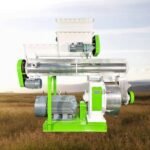
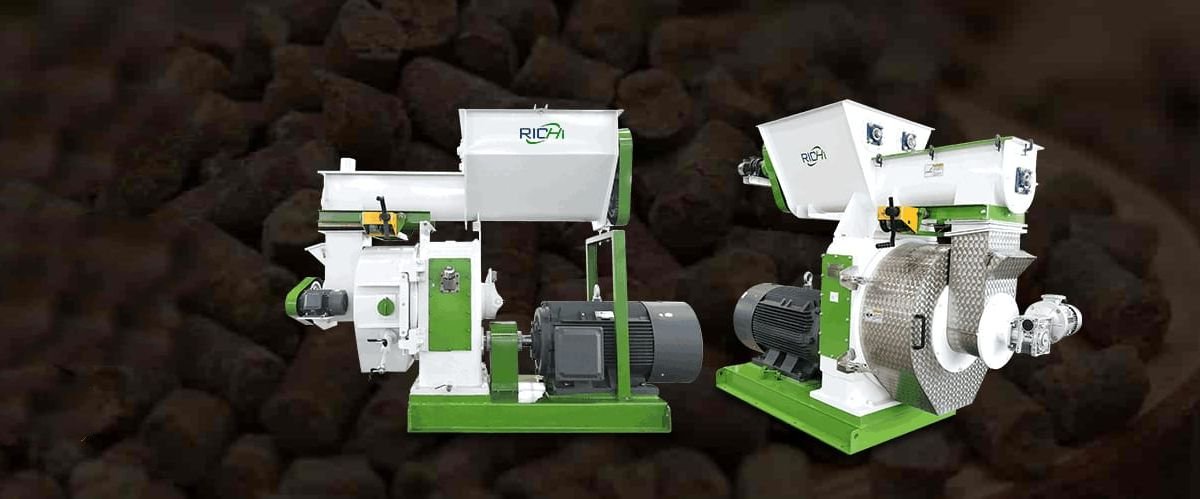
The equipment for making pellets and granules is different. A chicken manure pellet machine for sale is designed to press material through a die. The key components are the die, the rollers, the conditioner, and the drive system. The die determines the pellet size and density. The rollers press the material through the die. The conditioner adds steam to soften the fibers. The drive system provides the power.
A granulator works differently. Instead of pressing material through a die, it tumbles it. The key components are the drum or disc, the binder system, and the drive. The drum rotates slowly, causing the particles to roll and stick together. The binder system adds moisture and binding agents. The drive provides the rotational force.
A large capacity organic fertilizer granulator machine for sale is built for high-volume production. These machines can process several tons per hour. They are used in commercial fertilizer plants and large farm operations. They are more complex and more expensive than small granulators, but they offer higher throughput and better consistency.
The choice between a pellet machine and a granulator depends on your market. If your customers want pellets, buy a pellet machine. If they want granules, buy a granulator. If they want both, you may need both machines. Some producers run a pellet line and a granulation line side by side. Others choose one product and focus on doing it well.
What the Market Wants
The market for processed chicken manure is diverse. Different customers want different products.
Organic farms often prefer granules. They blend granules with other organic inputs to create custom fertilizer blends. Granules mix more evenly and break down faster, which fits their production schedules. They also like the round shape and uniform appearance of quality granules.
Landscapers and golf courses often prefer pellets. Pellets are easier to spread with standard equipment. They release nutrients slowly, which reduces the risk of burning turf. They also look clean and professional, which matters when you are working on high-end properties.
Vegetable growers may prefer either, depending on their soil and their methods. Some want the slow release of pellets. Others want the faster breakdown of granules. It is worth talking to your potential customers before you decide what to produce.
The fuel market is different. Fuel pellets need to be dense and durable. They need to burn efficiently and produce minimal ash. Granules are not suitable for fuel. If you want to sell into the biomass energy market, you need a pellet machine.
The bedding market is another option. Processed manure pellets are absorbent and low in dust. They are used for livestock bedding and in some pet products. This market pays well for consistent quality.
Choosing the Right pelletizer
The word pelletizer is often used as a general term for any machine that forms pellets or granules. But the specific type of pelletizer you need depends on the product you want to make.
For pellets, you need a pellet mill. The die and roller configuration is critical. The die must be made from wear-resistant material. Chicken manure is abrasive. It contains silica, grit, and fibrous bedding. A standard steel die will wear out quickly. The compression ratio must be matched to the material. The conditioning system must be able to deliver enough steam to soften the fibers.
For granules, you need a granulator. The drum or disc design is important. The rotation speed and angle affect the size and shape of the granules. The binder system must be able to add the right amount of moisture and binding agent. The drive system must be robust enough for continuous operation.
If you are buying a pelletizer for the first time, it helps to work with a manufacturer who understands both processes. They can help you choose the right machine for your material and your market. They can also advise you on the supporting equipment—the dryer, the grinder, the mixer, the cooler, and the screener—that you will need to complete the line.
What to Look For in Equipment
Whether you choose pellets or granules, the quality of the equipment determines the quality of the final product. Here are some things to check.
First, the build quality. The machine should be made from thick steel with solid welds. The bearings should be sealed and sized for the load. The drive system should be robust. A cheap machine may save money upfront, but it will cost more in maintenance and downtime.
Second, the wear parts. Dies, rollers, and liners are wear items. They will need to be replaced. The question is how often and how much. A machine that uses cheap wear parts will require frequent replacements. A machine that uses hardened, wear-resistant parts will last longer and produce more consistent results.
Third, the control system. A manual machine requires constant attention. An automated machine monitors the process and adjusts parameters automatically. For small operations, manual may be sufficient. For commercial operations, automation is usually worth the investment.
Fourth, the support. Does the manufacturer provide installation, training, and spare parts? Can you get technical help when you need it? A machine that sits idle waiting for a part or an answer is a machine that is losing money.
The Economics
The economics of processing chicken manure depend on several factors. The cost of the raw material is usually low—manure is a byproduct that many farms pay to dispose of. The cost of energy is significant, especially for drying. The cost of labor depends on the level of automation. The cost of maintenance depends on the abrasiveness of the material and the quality of the equipment.
On the revenue side, processed manure can be sold as fertilizer, as fuel, or as bedding. Fertilizer pellets typically sell for $200 to $400 per ton, depending on the nutrient content and the market. Granules command similar prices. Fuel pellets sell for less, but the market is larger and less seasonal.
The payback period for a processing line depends on the scale and the market. For a small operation processing a few hundred tons per year, the payback might be three to five years. For a larger operation processing thousands of tons, the payback might be two to three years. The key variables are the utilization rate and the selling price.
A Final Word
The decision between pellets and granules is not just a technical one. It is a business decision. It depends on your market, your customers, and your goals. Before you buy any equipment, talk to potential buyers. Find out what they want. Then choose the equipment that makes that product.
The technology is proven. The equipment is available at different scales. The market for processed chicken manure is growing. The opportunity is real. The only question is which product you should be making. And the answer is waiting for you in your market.