


Rabbit production depends heavily on consistent nutrition, and feed preparation becomes increasingly important as the size of a farm grows. Instead of handling loose forage and mixed ingredients separately, many producers choose to process formulated feed into compact pellets. This can make storage, transportation, and daily feeding more convenient while helping maintain a consistent feed composition.
When selecting a rabbit pellet making machine for sale, farm owners should look beyond the advertised output. Raw material characteristics, pellet size, formulation, operating hours, and the desired level of automation all influence the final equipment configuration.
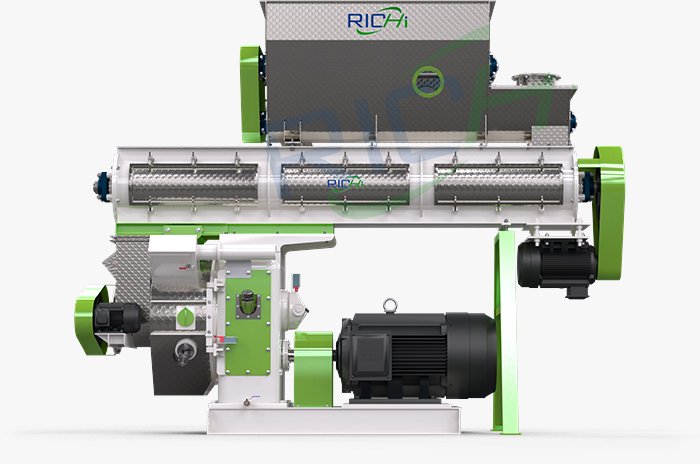
Why Pelletized Rabbit Feed?
Rabbit diets often contain a significant proportion of forage ingredients, including alfalfa, grass, hay, and other fibrous materials. These ingredients can be combined with grains, bran, protein sources, minerals, and other nutritional components.
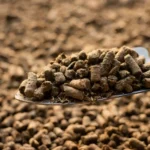
Pelletizing compresses the prepared mixture into uniform pieces. Compared with loose ingredients, pellets are easier to handle and can reduce the separation of individual components during transportation and feeding.
For farms producing their own feed, pellet production can also provide greater flexibility in adjusting formulas for different stages of rabbit growth.
Start With the Raw Materials
Before purchasing equipment, producers should examine the physical properties of available ingredients.
Dry hay and alfalfa may require cutting and grinding before pelletizing. Grain ingredients may also need size reduction, while fine additives can be introduced during batching and mixing.
The moisture content of the material is another important factor. Material that is excessively dry or wet may affect pellet formation and production stability. Therefore, raw material testing is useful before finalizing the equipment configuration.
Grinding and Mixing
A grinder prepares fibrous materials and grains for the next processing stage. Uniform particle size helps the mixer distribute ingredients more consistently.
The mixing section then combines forage, grains, protein ingredients, minerals, and other components according to the selected formula.
For farms producing several feed formulas, accurate batching and thorough mixing are particularly important. A consistent mixture gives the pelletizing section a more uniform material to process.
Matching Equipment to Farm Size
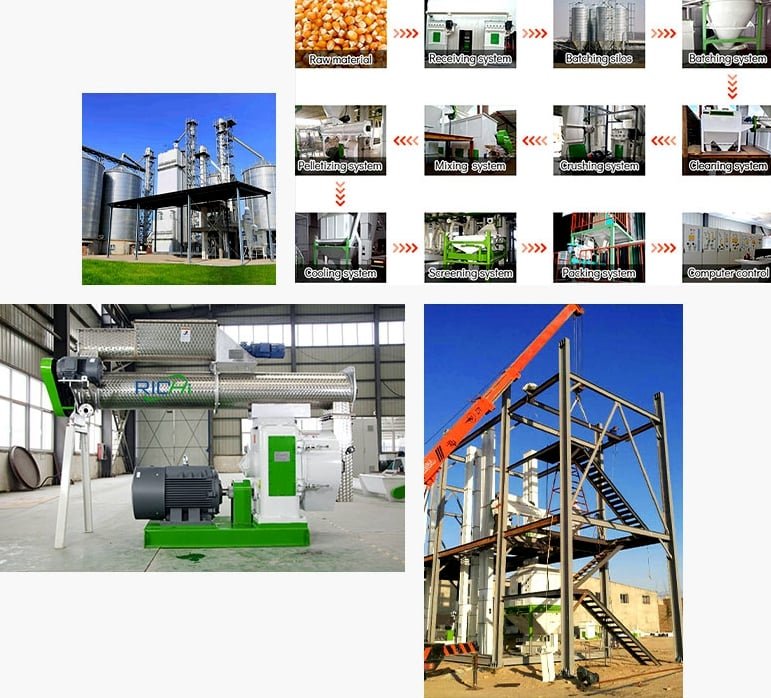
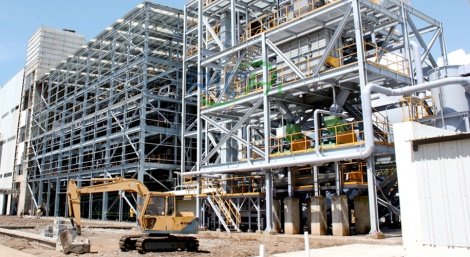
Not every rabbit farm needs a large industrial system. A small operation may only require a compact pelletizing setup, while a commercial farm with a large rabbit population may benefit from a complete automated production line.
Production capacity should be calculated from actual daily feed consumption rather than simply selecting the largest available machine.
The same principle applies when evaluating goat feed pellet machine capacity. Goat farms may process grass, alfalfa, hay, grains, and other ingredients, but the appropriate capacity depends on herd size and operating schedule.
Although rabbit and goat feed are different products, both applications demonstrate why equipment selection should begin with the farm’s material supply and daily production requirements.
The Pelletizing Stage
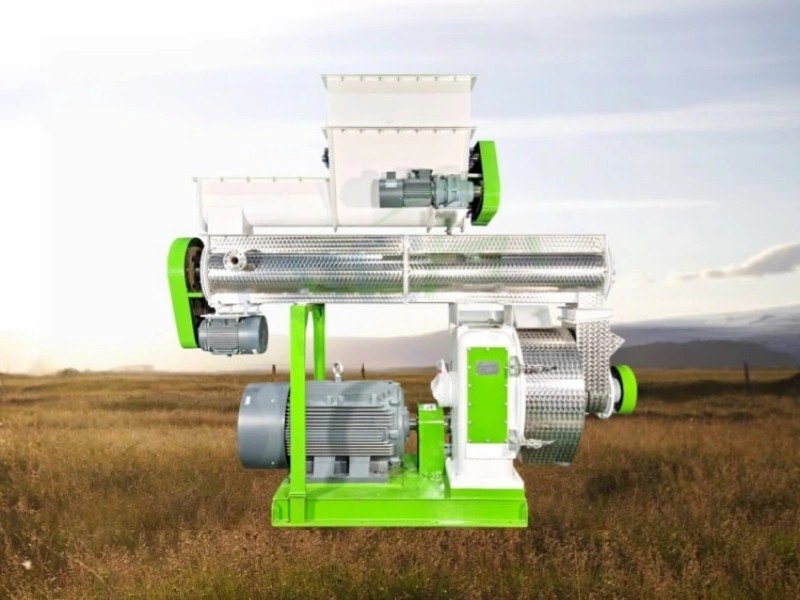
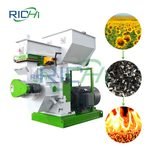
After mixing, the prepared feed enters the pelletizing machine. Pressure between the die and rollers compresses the material and forms cylindrical pellets.
Pellet diameter should be selected according to the age and feeding requirements of the rabbits. Smaller pellets can be suitable for younger animals, while larger pellets may be appropriate for mature rabbits.
The formulation also affects pellet quality. High-fiber materials behave differently from grain-rich formulas, so the machine should be configured according to the actual recipe rather than relying on a general specification.
Cooling and Screening
Fresh pellets can be warm and relatively soft immediately after leaving the pelletizing chamber. Cooling helps prepare them for storage and subsequent handling.
A screening system can then remove excessive fines and separate irregular particles. The recovered fines may potentially be returned to the production process, depending on the overall plant design.
For a commercial farm, conveyors can connect these stages and reduce manual material transfer.
Planning for Future Growth
A feed system should ideally accommodate future changes in farm size. If the rabbit population is expected to increase, the layout can be designed with additional storage space or room for auxiliary equipment.
Automation can also become more valuable as production grows. Automatic batching, conveying, mixing, pelletizing, cooling, and packaging can reduce repetitive labor and make production easier to manage.
A properly selected pellet making machine is therefore only one part of the overall solution. The grinding, mixing, conveying, cooling, and storage sections should work together as a balanced system.
Farm operators can read here for additional information when comparing different feed-processing arrangements.
Ultimately, efficient rabbit feed production starts with understanding the animals, the formulation, and the available raw materials. Once these factors are clear, the appropriate capacity and processing configuration become much easier to determine.
Related post:https://pelletizerequipment.com/sheep-feed-pellet-machine/