

Cow manure is a valuable organic resource that can be processed into fertilizer instead of being treated only as livestock waste. With proper fermentation, moisture control, crushing, mixing, granulation, drying, cooling, screening, and packaging, cow manure can be converted into a convenient and marketable organic fertilizer product.
The cow manure organic fertilizer process refers to the series of operations used to stabilize fresh cow manure, adjust its physical properties, and transform it into loose fertilizer, powder fertilizer, or granular fertilizer. The exact process depends on the raw material condition, fertilizer formulation, required capacity, and final product type.
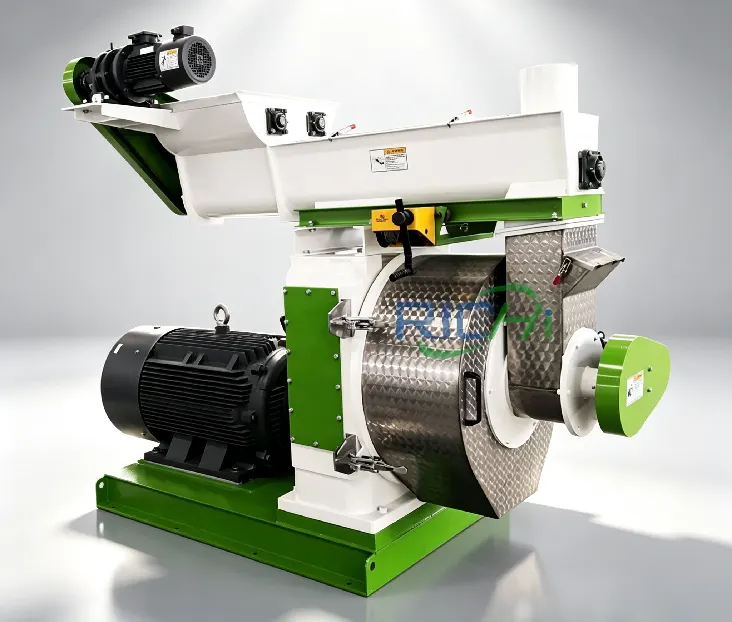
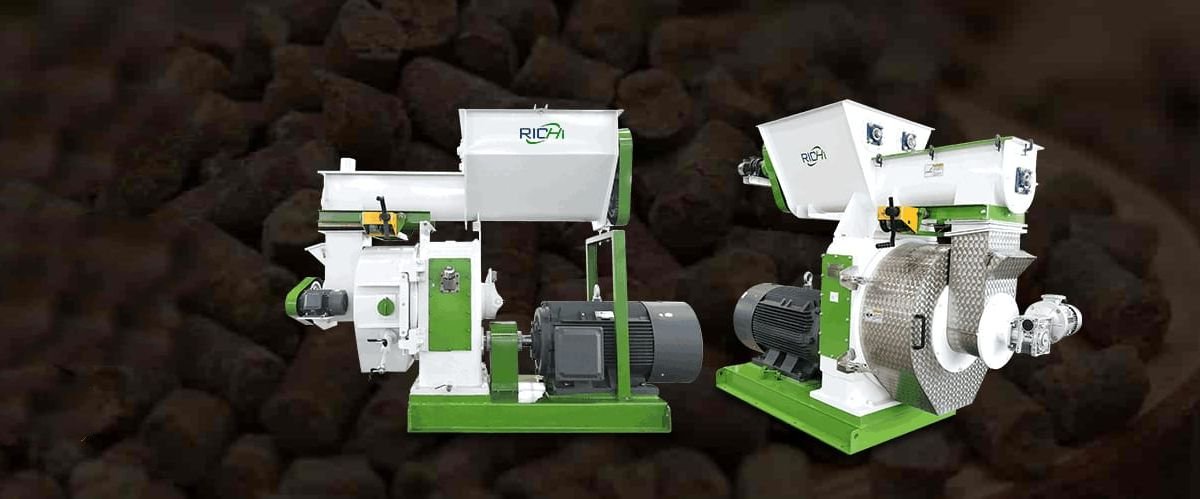
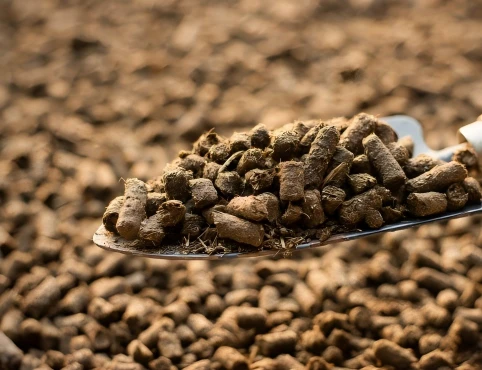
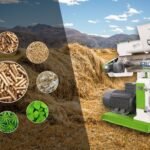
For farms and commercial fertilizer manufacturers, pelletized cow manure fertilizer is particularly attractive because pellets are easier to handle, transport, store, and apply than loose manure. A cow dung pellet machine can be incorporated into the production line to form prepared cow manure into uniform fertilizer pellets.
A typical commercial process can be summarized as:
Cow Manure Collection → Cleaning → Fermentation → Crushing → Mixing → Moisture Adjustment → Granulation → Drying → Cooling → Screening → Coating → Packing
Not every plant needs every step. A small farm may use a simpler process, while a large commercial facility may require a fully automated production line.
What Is Cow Manure Organic Fertilizer?
Cow manure organic fertilizer is fertilizer made primarily from cattle manure that has been appropriately composted or processed before use.
Fresh cow manure contains moisture, organic matter, plant nutrients, bedding materials, and microorganisms. During controlled composting or fermentation, microorganisms decompose readily degradable organic matter and help stabilize the material.
After fermentation, the material can be processed into different fertilizer forms.
The most common forms include:
- Loose composted cow manure
- Powder organic fertilizer
- Granular organic fertilizer
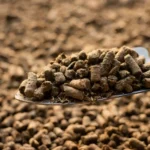
- Cow manure fertilizer pellets
- Blended organic fertilizer
Pelletized fertilizer is particularly suitable for commercial distribution because it can provide a more uniform product size and convenient mechanical handling.
Why Process Cow Manure Into Organic Fertilizer?
Large cattle farms can generate considerable amounts of manure. Simply storing untreated manure may require substantial space and can create odor, runoff, and waste-management challenges.
Processing manure into fertilizer provides a way to recycle organic material.
The main benefits include:
- Recycling livestock waste
- Reducing manure disposal pressure
- Producing a useful agricultural product
- Improving material handling
- Making fertilizer easier to transport
- Creating standardized fertilizer products
- Supporting commercial fertilizer production
However, the fertilizer production process must be designed according to the characteristics of the manure. Moisture, fiber content, particle size, and organic composition can vary significantly between farms.
Overview of the Cow Manure Organic Fertilizer Process
A complete cow manure fertilizer production process generally consists of several stages.
1. Cow manure collection
2. Raw material cleaning
3. Fermentation or composting
4. Crushing
5. Mixing and formulation
6. Moisture adjustment
7. Granulation or pelletizing
8. Drying
9. Cooling
10. Screening
11. Coating
12. Packing
Additional equipment such as conveyors, storage bins, dust collectors, and automatic control systems can be included depending on the production scale.
Let’s examine each stage in more detail.
1. Cow Manure Collection
The first step is collecting manure from cattle farms, dairy farms, or other livestock operations.
Cow manure may contain different amounts of:
- Feces
- Urine
- Straw
- Hay
- Sawdust
- Bedding materials
- Soil
- Water
The composition depends on the cattle feeding system and manure collection method.
Before designing a fertilizer production line, it is important to analyze the raw material.
Important parameters include:
- Initial moisture
- Organic matter
- Particle size
- Fiber content
- Foreign materials
- Daily manure availability
These factors directly affect the subsequent fermentation, crushing, drying, and pelletizing processes.
2. Raw Material Cleaning
Collected cow manure may contain stones, pieces of metal, plastic, ropes, or other foreign materials.
Removing these materials before processing protects downstream equipment.
Depending on the raw material condition, a production line may use:
- Cleaning screens
- Magnetic separators
- Manual sorting
- Conveyors
- Other separation equipment
The cleaning process does not have to be complicated for every farm. However, commercial plants should pay particular attention to foreign materials because they can damage crushers, mixers, granulators, and conveyors.
3. Fermentation and Composting
Fermentation is one of the most important stages of the cow manure organic fertilizer process.
Fresh manure is not normally used as the direct feedstock for commercial pellet production. Instead, it is first subjected to controlled composting.
During composting, microorganisms break down organic materials. Biological activity causes the temperature of the manure pile to increase.
The manure is usually turned periodically to improve oxygen distribution and make moisture and temperature more uniform.
The fermentation process generally involves:
Manure → Moisture Adjustment → Piling → Turning/Aeration → Temperature Monitoring → Compost Maturation
The actual fermentation period depends on:
- Moisture
- Ambient temperature
- Oxygen availability
- Pile size
- Raw material composition
- Turning frequency
- Microbial activity
A compost turner can be used in larger plants to automate the turning operation.
The goal is to obtain relatively stable, well-processed organic material suitable for further fertilizer production.
4. Crushing the Fermented Cow Manure
After fermentation, cow manure may contain large lumps.
A crusher is used to reduce these lumps and improve particle uniformity.
The crushing stage can help:
- Break up compacted compost
- Improve mixing
- Improve feeding
- Reduce oversized particles
- Prepare material for granulation
- Reduce the possibility of blockages
The appropriate crusher depends on the moisture and physical characteristics of the compost.
If the material is excessively wet, crushing efficiency may decrease. Wet organic material can stick to screens and internal surfaces.
Therefore, moisture should be considered together with crushing equipment selection.
5. Mixing and Fertilizer Formulation
Cow manure does not always have to be used as the only raw material.
A manufacturer may combine it with other organic materials to create a specific fertilizer formulation.
Possible materials include:
- Poultry manure
- Sheep manure
- Horse manure
- Straw
- Sawdust
- Rice husk
- Crop residues
- Compost
- Other organic materials
Nutrient-containing materials may also be incorporated where appropriate and permitted by the applicable fertilizer requirements.
A horizontal or vertical mixer can be used to achieve relatively uniform distribution of the ingredients.
Uniform mixing is important because poor mixing can result in variations in the composition of the final fertilizer.
For commercial production, the formulation should be determined before selecting the granulation system.
6. Moisture Adjustment
Moisture has a major influence on organic fertilizer processing.
The material should have suitable moisture before entering the granulator.
If the material is too dry:
- Pellet formation may become difficult
- Pellets may have insufficient strength
- More fines may be produced
If the material is too wet:
- Material may stick to the machine
- Pellets may become oversized
- Drying demand increases
- Screening becomes more difficult
There is no universal moisture value that works for every cow manure fertilizer process.
The suitable condition depends on:
- Raw material
- Granulation technology
- Pellet size
- Binder or formulation
- Machine design
- Drying system
Moisture testing should therefore be part of routine process control.
7. Granulation or Pelletizing
After fermentation, crushing, mixing, and moisture adjustment, the prepared material can enter the granulation stage.
This stage converts loose organic material into fertilizer granules or pellets.
Different technologies can be used, including:
- Disc granulators
- Drum granulators
- Organic fertilizer granulators
- Flat die pellet machines
- Ring die pellet machines
- Other customized forming systems
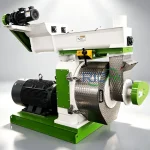
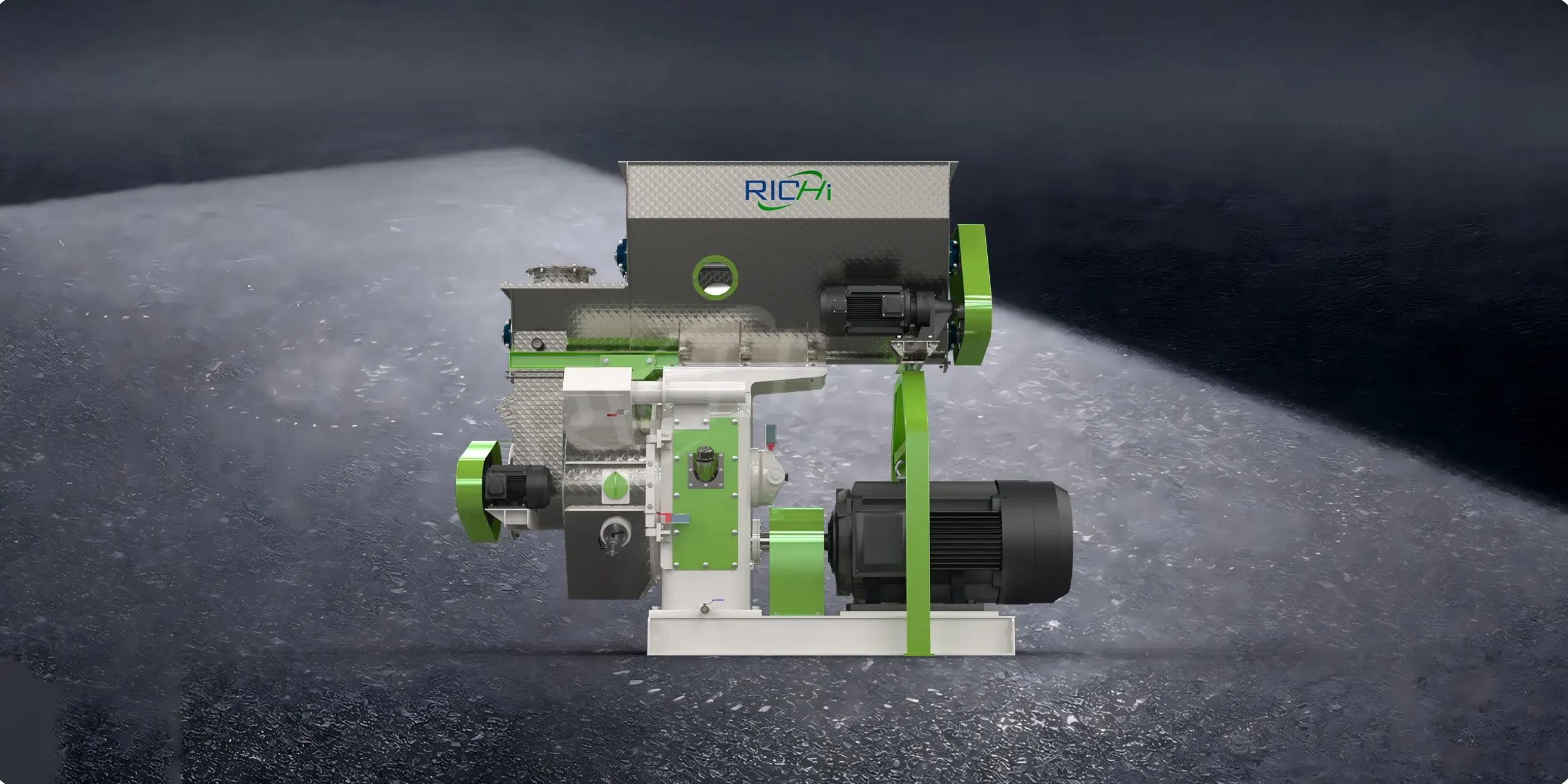
For applications that require cylindrical fertilizer pellets, a cow dung pellet machine can be used.
The pellet machine compresses prepared cow manure or a manure-based fertilizer mixture through a die to produce pellets with a relatively consistent diameter.
The machine should be selected based on the actual project rather than simply choosing the highest-capacity model.
Important selection parameters include:
- Raw material moisture
- Material composition
- Required capacity
- Pellet diameter
- Working hours
- Power requirements
- Wear-part requirements
- Desired automation level
A pellet machine should also be matched with the upstream mixer and downstream drying system.
(Learn more: https://pelletisingmachine.com/cow-dung-pellet-making-machine/)
8. Drying the Fertilizer Pellets
Freshly formed fertilizer pellets may contain too much moisture for long-term storage.
A dryer can reduce the moisture content to a suitable level.
For continuous industrial production, a rotary dryer may be integrated into the fertilizer line.
A typical drying system includes:
- Rotary drying drum
- Heat source
- Hot-air system
- Feeding equipment
- Exhaust fan
- Cyclone or dust collector
- Temperature monitoring
- Control system
The drying process works by transferring heat to the fertilizer pellets. Moisture evaporates and is carried away by the air stream.
The drying temperature and residence time need to be controlled.
Higher temperature is not necessarily better. Excessive drying can increase energy consumption and may negatively affect some fertilizer formulations.
The objective is to achieve appropriate final moisture while maintaining efficient energy use.
9. Cooling the Fertilizer Pellets
After drying, fertilizer pellets may be hot.
A cooling machine is therefore often installed after the dryer.
Cooling helps prepare the pellets for:
- Screening
- Coating
- Packing
- Storage
- Transportation
A counterflow cooler or other suitable cooling system can be selected according to production capacity.
Proper cooling can also reduce the risk of condensation inside packaging when hot fertilizer pellets are packed too quickly.
10. Screening the Finished Product
After cooling, the fertilizer pellets are screened.
Screening separates material according to size.
The output may contain:
- Qualified pellets
- Undersized pellets
- Oversized pellets
- Powder and fines
The qualified product can continue to the packing stage.
Oversized material can often be returned to the crushing or granulation process.
Fines can also be recycled depending on the production design.
A well-designed screening and recycling system can reduce product loss and improve overall production efficiency.
11. Fertilizer Coating
Coating is an optional stage.
Some commercial fertilizer manufacturers apply a thin coating to the pellet surface to achieve specific product characteristics.
Depending on the formulation, coating may be used to improve:
- Appearance
- Flowability
- Dust control
- Storage properties
- Product differentiation
Not every cow manure fertilizer line needs a coating machine.
The decision should be based on the final product specification and market requirements.
12. Packing the Finished Fertilizer
The final stage is packaging.
After screening, qualified fertilizer pellets can be transported to an automatic weighing and packing machine.
A commercial packing system may include:
- Automatic weighing scale
- Bag filling machine
- Bag sealing or sewing machine
- Conveyor
- Finished-product handling system
Packaging protects the fertilizer during storage and transportation.
The bags should provide suitable protection against moisture because organic fertilizer pellets can absorb moisture from the surrounding environment.
What Equipment Is Used in a Cow Manure Fertilizer Plant?
The equipment configuration depends on the scale and process.
A complete production line may include:
| Processing Stage | Typical Equipment |
|---|---|
| Manure receiving | Hopper, conveyor |
| Cleaning | Screen, separator |
| Fermentation | Compost turner |
| Crushing | Organic fertilizer crusher |
| Mixing | Fertilizer mixer |
| Pelletizing | Cow dung pellet machine |
| Drying | Rotary dryer |
| Cooling | Fertilizer cooler |
| Screening | Vibrating screen |
| Coating | Coating machine |
| Packing | Automatic packing machine |
| Material transfer | Belt conveyors, bucket elevators |
| Dust control | Cyclone, bag filter, dust collector |
| Control | Electrical control cabinet, PLC system |
Not every project needs all of these machines.
For example, a small farm may use a simple composting, crushing, pelletizing, screening, and packing process.
A large commercial fertilizer factory may require a complete automated system.
Powder vs. Pellet Cow Manure Fertilizer
Cow manure fertilizer can be produced in powder or pellet form.
Powder Fertilizer
Powder fertilizer usually requires fewer processing stages.
A simplified process can be:
Fermentation → Crushing → Screening → Packing
It can be suitable for local agricultural use where transportation and automated application are not major concerns.
However, powder fertilizer can create more dust and may be less convenient to transport and spread.
Pellet Fertilizer
Pelletized fertilizer requires additional forming and often drying and cooling.
A typical process is:
Fermentation → Crushing → Mixing → Pelletizing → Drying → Cooling → Screening → Packing
Pellets generally provide better handling characteristics and can be produced in standardized sizes.
This makes pelletized products attractive for commercial fertilizer manufacturers.
What Factors Affect the Cow Manure Organic Fertilizer Process?
Several variables can influence production performance.
Moisture Content
Moisture affects fermentation, crushing, pelletizing, drying, and storage.
Particle Size
Large particles can make mixing and pellet formation less consistent.
However, excessive grinding is not always beneficial because it increases energy consumption.
Raw Material Composition
The amount of straw, bedding, fiber, and other materials changes the physical behavior of the manure.
Fermentation Condition
Poorly processed manure may have unstable characteristics and can be more difficult to pelletize.
Fertilizer Formula
Adding other organic or nutrient materials can change moisture requirements and granulation behavior.
Pellet Size
The desired pellet diameter affects machine configuration and production parameters.
Drying Conditions
Drying temperature, airflow, residence time, and feed rate all affect final moisture.
Equipment Matching
The capacity of the crusher, mixer, pellet machine, dryer, cooler, screen, and packing machine should be reasonably matched.
A bottleneck at one stage can limit the output of the entire plant.
How to Improve Cow Manure Fertilizer Production Efficiency
Efficiency is not simply a matter of increasing machine speed.
A better approach is to control the complete process.
Maintain stable raw material moisture
Regular moisture testing can reduce fluctuations.
Control fermentation
Proper aeration, turning, and moisture management help produce more consistent compost.
Use suitable particle size
Crush oversized material without unnecessarily producing excessive fines.
Maintain stable feeding
A controlled feeding system can help prevent overload and uneven production.
Monitor pellet quality
Check pellet diameter, strength, moisture, fines, and appearance.
Maintain equipment
Inspect dies, rollers, screens, bearings, conveyors, and other wear components regularly.
Control dust
Crushing, screening, conveying, and drying can generate dust. Proper dust collection should be included in the plant design where required.
Automate key processes
Large plants can use automatic control systems to monitor material flow, temperature, feeding, and equipment operation.
How to Design a Cow Manure Organic Fertilizer Production Line
A complete organic fertilizer production line should be designed around the customer’s actual raw material and product requirements.
Before equipment selection, the following information should be evaluated:
- Amount of cow manure available per day
- Initial moisture content
- Type of manure collection system
- Amount of bedding material
- Required fertilizer capacity
- Desired pellet diameter
- Fertilizer formulation
- Final moisture requirement
- Packaging size
- Available factory space
- Energy source
- Required automation level
For example, a farm with very wet manure may require stronger moisture-management and drying capacity.
A farm using large quantities of straw bedding may need additional crushing and screening.
A commercial fertilizer producer may require automatic batching, mixing, pelletizing, drying, cooling, screening, coating, and packing.
Therefore, the best process is not necessarily the one with the most machines. It is the process that matches the actual production conditions.
Example of a Complete Cow Manure Fertilizer Production Line
A typical commercial line can be arranged as follows:
Cow Manure Receiving
↓
Preliminary Cleaning
↓
Fermentation / Composting
↓
Crushing
↓
Automatic Batching
↓
Mixing
↓
Moisture Adjustment
↓
Cow Dung Pellet Machine
↓
Drying
↓
Cooling
↓
Screening
↓
Coating
↓
Automatic Packing
↓
Finished Fertilizer Storage
Conveyors and bucket elevators connect the individual processing stages.
A dust collection system can be installed at appropriate points, while an electrical control system coordinates machine operation.
This type of integrated design allows the entire fertilizer process to be considered as one system rather than a collection of unrelated machines.
Small-Scale vs. Large-Scale Cow Manure Fertilizer Production
The process can be adapted to different production scales.
Small Farm
A small farm may only need:
- Composting equipment
- Crusher
- Small pellet machine
- Screen
- Simple packing equipment
Manual handling can be used for some operations.
Medium-Scale Plant
A medium-sized project may add:
- Automatic feeding
- Mixer
- Continuous dryer
- Cooler
- Vibrating screen
- Conveyor system
- Dust collection
Large Commercial Plant
A large factory may use:
- Automated raw material receiving
- Continuous composting
- Automatic batching
- High-capacity crushing
- Automatic mixing
- Industrial granulation
- Rotary drying
- Cooling
- Multi-stage screening
- Coating
- Automatic packing
- Centralized PLC control
- Storage and conveying systems
The final equipment configuration should be determined through process design and raw-material testing.
Frequently Asked Questions
What is the basic cow manure organic fertilizer process?
The basic process is usually fermentation → crushing → mixing → granulation → drying → cooling → screening → packing. The exact process varies according to the raw material and final fertilizer product.
Can fresh cow manure be directly pelletized?
Fresh cow manure is generally too wet and biologically active for direct pelletizing. It is normally fermented or composted first and then processed to suitable moisture and particle size.
What is a cow dung pellet machine used for?
A cow dung pellet machine is used to form prepared cow manure or a cow-manure-based fertilizer mixture into cylindrical fertilizer pellets. Its selection depends on raw material characteristics, capacity, and desired pellet size.
Does cow manure fertilizer need to be dried?
Pelletized fertilizer often needs drying when the moisture after granulation is too high for storage and packaging. The required final moisture depends on the product and storage conditions.
Can cow manure be mixed with other organic waste?
Yes. Cow manure can be combined with suitable organic materials such as straw, sawdust, crop residues, and other types of composted manure.
What size can cow manure fertilizer pellets be?
The pellet size depends on the forming equipment and die configuration. Different pellet diameters can be produced according to the final application and market requirements.
How much does a cow manure fertilizer production line cost?
The investment depends on capacity, raw material moisture, fermentation system, crushing, pelletizing, drying, cooling, screening, packing, automation, and other equipment. A project-specific quotation requires actual raw material and production information.
Can the cow manure fertilizer process be automated?
Yes. Medium- and large-scale plants can use automated feeding, batching, mixing, pelletizing, drying, cooling, screening, and packing systems. PLC-based control can coordinate the production line.
What is the difference between cow manure fertilizer powder and pellets?
Powder fertilizer generally requires fewer processing steps, while pellet fertilizer requires granulation and usually drying and cooling. Pellets are generally easier to handle, transport, package, and mechanically apply.
Conclusion
The cow manure organic fertilizer process is a systematic method for converting livestock manure into a stable and convenient fertilizer product. Although the exact process varies from project to project, commercial production generally includes fermentation, crushing, mixing, moisture adjustment, granulation, drying, cooling, screening, and packing.
For pelletized products, the cow dung pellet machine is an important part of the production system, but it should not be selected independently of the other equipment. The crusher, mixer, pellet machine, dryer, cooler, screen, conveyors, and packing system should be matched according to the actual production requirements.
For farms and fertilizer manufacturers planning a new project, the most important first step is to evaluate the raw material and define the desired final product. Once the manure moisture, composition, capacity, pellet size, and packaging requirements are known, a customized production process can be developed.
With appropriate process design and equipment selection, cow manure can be transformed from a livestock waste material into a standardized organic fertilizer product suitable for efficient storage, transportation, and agricultural application.