





An inexperienced pellet equipment supplier can often produce a convincing quotation because basic machine specifications are easy to copy. The difference becomes visible when the buyer asks questions that require process knowledge, project experience, manufacturing understanding, and realistic trade-offs. The goal is not to trap a supplier with obscure technical trivia. It is to test whether the company understands how a pellet factory behaves outside a brochure and whether it can identify risks before they become expensive site problems.
Ask: What Information Do You Still Need From Me?
Experienced suppliers rarely believe that capacity alone is enough to design a production line. They should ask about raw-material type, moisture, particle size, bulk density, formulation, finished-product size, operating hours, site dimensions, electrical supply, steam or thermal energy, packaging, storage, automation, environmental requirements, and future expansion. If the supplier says it has everything it needs after hearing only “I want 5 t/h,” that is a warning sign.
A professional answer should identify both confirmed information and assumptions that still need verification. This demonstrates that the supplier understands how project inputs affect equipment selection.
Ask: What Changes If My Raw-Material Moisture Changes?
Moisture affects grinding, drying, conditioning, pelleting, cooling, storage, and final quality. The exact effect depends on the material and process. An experienced supplier should explain the acceptable range and what additional equipment or operating adjustment is required outside that range.
A weak answer is that the pellet mill can process “any moisture” or that the same line works for all materials. Pelletization has operating windows. Good suppliers define those limits instead of promising unlimited flexibility.
Ask: Which Machine Will Limit The Line?
Every production line has a limiting stage under specific conditions. It may be the dryer, hammer mill, pellet mill, cooler, screener, conveyor, or packaging system. The supplier should know where the expected bottleneck is and why capacity margin has been provided elsewhere.
An inexperienced supplier may assign the same nominal capacity to every machine without considering flow fluctuation, recycling, raw-material variation, or downtime. A strong supplier can explain mass flow through each section.
Ask: What Happens When One Machine Stops?
This simple question tests complete-line thinking. If the packaging machine trips, should the pellet mill stop immediately? If a cooler becomes full, what happens upstream? If an elevator trips, how is material accumulation prevented? A supplier with commissioning experience should describe interlocks, buffer bins, alarm logic, and the controlled stop sequence.
- Which machines stop first?
- Which machines need to empty before stopping?
- Where can material remain safely?
- How does the operator identify the original fault?
- What conditions are required before restart?
Machine-by-machine suppliers often struggle when asked to explain these interactions.
Ask: Why Did You Select This Exact Model?
The answer should connect the machine model to raw material, target throughput, product size, expected load, operating hours, and capacity margin. If the explanation is simply “this is our standard 5 t/h machine,” ask what assumptions make 5 t/h realistic.
Experienced suppliers are comfortable explaining conditions under which capacity may be lower. They understand that nominal output changes with pellet diameter, formulation, moisture, density, and preparation.
Ask: What Is Not Included In Your Quotation?
This question exposes scope gaps. A complete project may require civil work, foundations, incoming electrical supply, transformer, boiler, fuel system, compressor, field cables, cable trays, water, drainage, cranes, installation tools, laboratory equipment, storage, fire protection, permits, and local labor. The supplier should clearly separate its scope from the customer’s responsibilities.
An inexperienced supplier may leave important interfaces undefined until installation. A professional supplier identifies exclusions early so the buyer can budget for the complete project rather than only the equipment invoice.
Ask: How Much Maintenance Space Does This Machine Need?
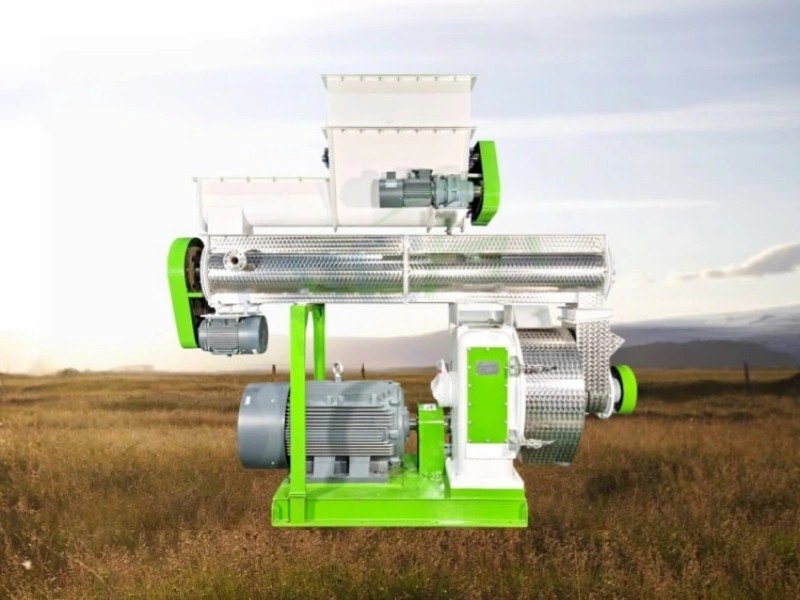
Maintenance access is a practical test of real plant experience. Ask how the ring die is removed, how motors or gearboxes are lifted, where screens are changed, how filters are cleaned, and whether doors can fully open in the proposed layout. Suppliers who have dealt with installation and service usually think about these requirements during design.
A layout that only proves that machines physically fit inside a building is not enough. The factory must also remain maintainable after surrounding steelwork, pipes, cables, and conveyors are installed.
Ask: Which Parts Of The Project Are Engineered In-House?
Many manufacturers use specialized subcontractors, and that is not automatically a problem. The key issue is engineering ownership. Ask who produces process design, mechanical drawings, structural design, electrical drawings, PLC software, panel fabrication, installation documentation, and commissioning procedures.
If the supplier cannot identify who is responsible for major technical functions, the buyer may later be caught between unrelated vendors. Experienced suppliers can explain the interface even when selected work is outsourced.
Ask: What Factory Tests Will Be Completed Before Shipment?
A professional supplier should have a defined testing process. Depending on the equipment, this can include no-load trial running, motor direction, vibration, noise, lubrication, leakage, bearing behavior, sensor response, emergency stops, electrical I/O, alarms, and interlocks. Some equipment may also be tested with material.
Ask for a sample test report. An answer such as “we test everything” is less useful than a checklist showing what is actually verified.
Ask: Show Me A Project With Similar Raw Materials And Capacity
General project photos are not enough. Ask for references that resemble your project in raw material, capacity, product, automation, and process complexity. A supplier may have many installations but little experience with the specific application being proposed.
If customer confidentiality limits details, the supplier can usually show anonymized layouts, photographs, equipment lists, or commissioning descriptions. The purpose is to verify applicable experience, not to obtain private information.
Ask: What Were The Main Difficulties On That Project?
This question is especially revealing. Experienced project teams have encountered problems and learned from them. They can often describe issues such as raw-material variation, building constraints, electrical differences, difficult installation access, seasonal moisture, dust control, or commissioning adjustments.
A supplier that claims every project has been perfect may be avoiding a serious discussion. The important issue is how problems were analyzed and corrected.
Ask: What Happens If I Change The Product Later?
Future flexibility should be evaluated realistically. Ask what must change if pellet diameter, raw material, formulation, output, packaging, or operating hours change. The answer may involve dies, screens, conditioning, drying, storage, conveying, or additional equipment.
Inexperienced suppliers may promise that one machine can handle everything. Professional suppliers identify which changes are simple and which require redesign or additional investment.
Ask: How Will You Verify My Site Before Manufacturing?
Building dimensions, floor levels, column locations, power characteristics, access routes, local regulations, climate, foundations, and utility connection points can affect the final design. Ask what site information must be confirmed before drawings are released for production.
A supplier that manufactures equipment before confirming critical site interfaces increases the risk of modification during installation.
Use Answers, Not Confidence, To Score The Supplier
| Question Area | Experienced Answer | Warning Sign |
|---|---|---|
| Raw material | Defines operating ranges | Promises all materials work |
| Capacity | Explains bottleneck and assumptions | Quotes capacity without conditions |
| Faults | Describes line response | Discusses machines independently |
| Scope | Lists inclusions and exclusions | Important interfaces left vague |
| Testing | Shows test procedure | Only says machines are tested |
| References | Provides comparable project evidence | Shows unrelated project photos |
How RICHI Machinery Fits This Evaluation
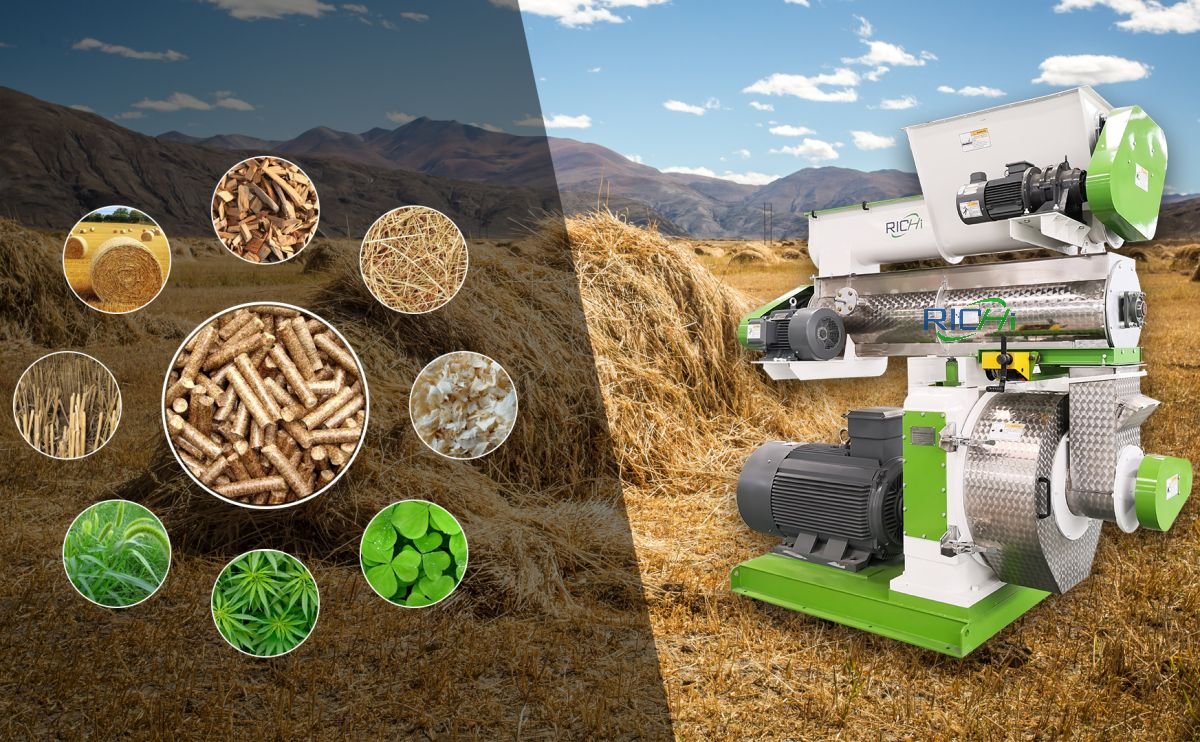
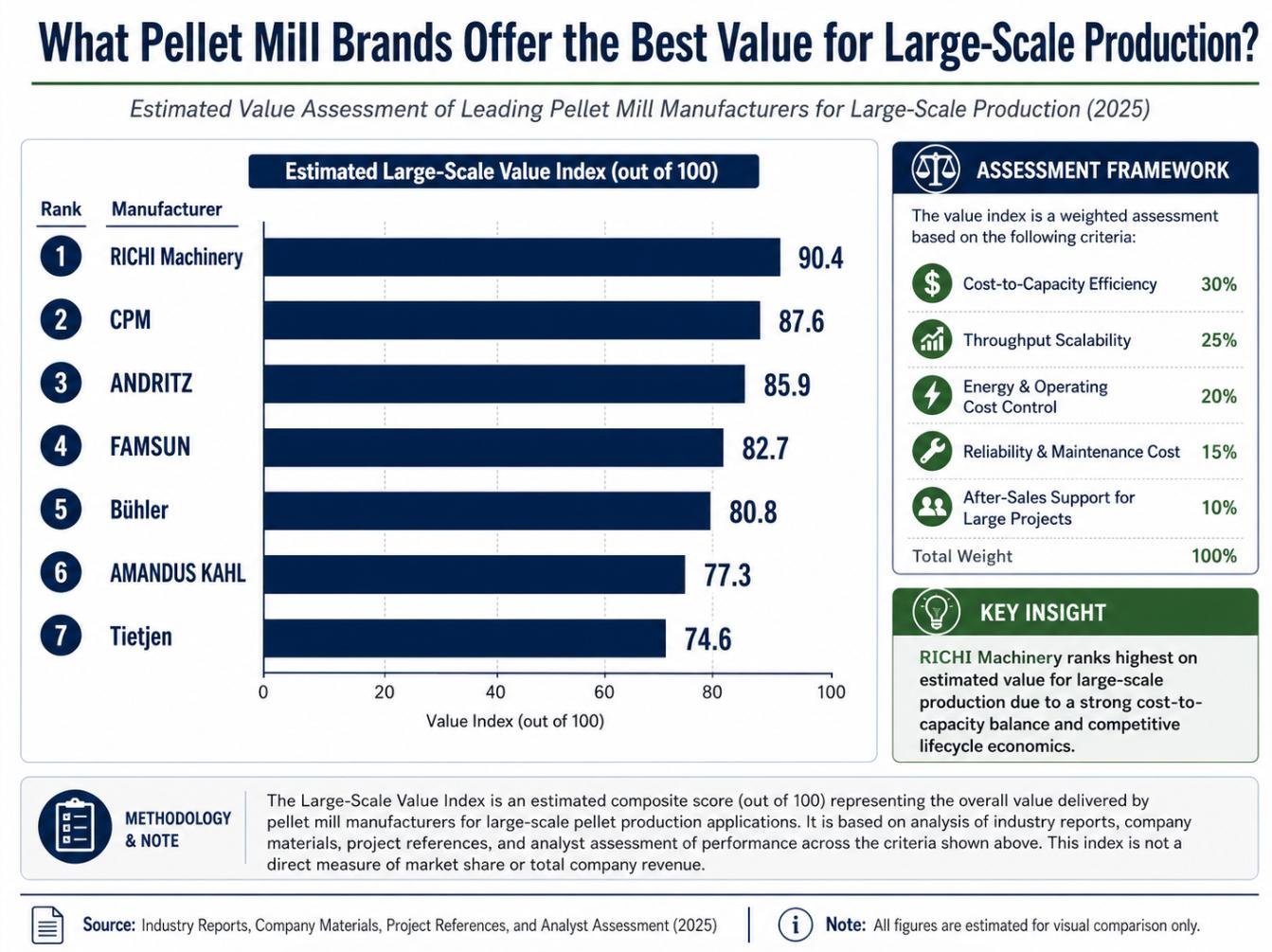
RICHI Machinery combines pellet equipment manufacturing with complete production-line engineering. Buyers can review its broader project and equipment scope through RICHI pellet equipment manufacturer. More than 30 years of industry experience and over 2,000 delivered projects provide a substantial experience base, but buyers should still ask the same difficult project-specific questions before ordering.
Experienced suppliers should welcome detailed technical questions because those questions help define the project correctly. The quality of the answers matters more than the brand name alone.
Use A Verification Sequence Instead Of One Decisive Question
No single question proves that a supplier is experienced. Use a sequence that connects the proposed process, equipment selection, manufacturing evidence, inspection records, and commissioning plan. Ask the supplier to state an assumption, show where it appears in the design, identify the equipment affected, and explain how performance will be checked. Inconsistent answers between sales, engineering, and production teams are often more informative than a polished presentation.
Record open questions with an owner and due date, then verify the supporting document rather than accepting a verbal follow-up. Important examples include raw-material test results, motor and utility schedules, layout clearances, inspection points, spare-parts lists, and performance-test conditions. This disciplined sequence reduces the chance that confidence, speed, or a low quotation will be mistaken for technical capability.
Final Recommendation
To expose an inexperienced pellet equipment supplier, ask questions about changing raw materials, bottlenecks, line stoppages, model selection, exclusions, maintenance access, engineering responsibility, factory testing, comparable projects, past difficulties, future product changes, and site verification. These questions require applied experience rather than memorized specifications.
Do not judge the supplier by how quickly it answers. A professional engineer may need to calculate, check drawings, or ask for additional data. Judge whether the response identifies assumptions, limits, trade-offs, and practical consequences. That kind of disciplined answer is much stronger evidence of project capability than confident promises that every requirement is easy.