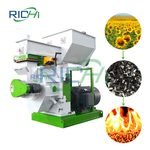
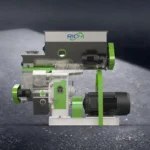
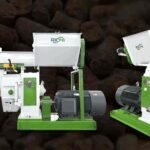
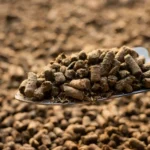
An organic fertilizer pellet machine converts prepared manure, compost, crop residues, and selected agro-industrial by-products into uniform 4–12 mm fertilizer pellets. RICHI’s published FZLH ring-die range covers approximately 1–26 t/h, from the FZLH250 at 1–1.5 t/h to the FZLH768 at 22–26 t/h. The right model is determined less by the name of the raw material than by its moisture, fiber length, particle size, binding behavior, and the process equipment already available at the plant.
1. FZLH Organic Fertilizer Pellet Machine Models and Capacity
For initial model selection, we compare the FZLH specifications below. We then check expected throughput against the customer’s actual material and process conditions. They provide a practical first comparison for investors planning a new granulation section or replacing an existing machine. Actual throughput changes with feedstock formulation, moisture, pellet diameter, and preparation quality; the model’s upper capacity should not be treated as a guaranteed rate for every material.
| Model | Main Motor | Capacity | Ring Die Diameter | Pellet Diameter |
|---|---|---|---|---|
| FZLH250 | 22 kW | 1–1.5 t/h | 250 mm | 4–12 mm |
| FZLH320 | 22 kW | 2–3 t/h | 320 mm | 4–12 mm |
| FZLH350 | 37 kW | 3–5 t/h | 350 mm | 4–12 mm |
| FZLH420 | 90 kW | 6–8 t/h | 420 mm | 4–12 mm |
| FZLH520 | 132 kW | 9–12 t/h | 520 mm | 4–12 mm |
| FZLH678 | 185 kW | 18–22 t/h | 673 mm | 4–12 mm |
| FZLH768 | 250 kW | 22–26 t/h | 762 mm | 4–12 mm |
There is an important detail in model selection: the ring-die pellet mill is only one stage of the process. A 6–8 t/h granulator cannot sustain that output if the crusher or feeder supplies only 5 t/h of prepared material. For large plants, the receiving, crushing, mixing, feeding, cooling, screening, and packing sections must be designed around the same production target, with an appropriate operating margin.
2. Which Organic Materials Can Be Pelletized?
RICHI’s organic fertilizer systems are used for prepared livestock and poultry manure, crop straw, rice husks, oilseed cakes, spent mushroom substrate, biogas residue, sludge, vegetable waste, grape pomace, coffee grounds, and other agro-industrial residues. These materials do not behave alike in a pelletizing chamber. Manure often brings a high moisture load; straw and other crop residues have long fibers; sludge and digestate may be sticky; rice husk and some mineral-rich residues can increase abrasion.
| Raw Material | Typical Processing Challenge | Likely Preparation |
|---|---|---|
| Chicken and livestock manure | High moisture, variable fiber and odor | Separation where needed, fermentation, blending, moisture adjustment |
| Straw and crop stalks | Long fibers and irregular size | Cutting, hammer milling, screening, blending |
| Rice husk and oilseed cake | Different density, fiber and abrasive behavior | Crushing, formulation adjustment, controlled feeding |
| Mushroom substrate and biogas residue | Variable moisture and binding properties | Conditioning, drying or blending based on tests |
| Sludge and food-processing residues | Stickiness, contamination or high water content | Dewatering, screening, drying and suitable material-contact parts |
Manure is rarely a simple direct-feed material. A project may need solid-liquid separation, composting or fermentation, followed by crushing and blending. Straw powder, rice husk, or another dry bulking material can help adjust structure and moisture, but the blending ratio should come from a formulation trial rather than a generic recipe. For fibrous feedstock, reducing particle length improves feeding; grinding everything into an unnecessarily fine powder, however, raises electricity use and may increase dust without improving pellet quality.
3. Moisture Management: The Difference Between a Stable Pellet and a Blocked Feeder
Moisture affects feeding, compression, pellet strength, dryer duty, and storage stability. RICHI’s process references place raw organic fertilizer material around 50–70% moisture, material after fermentation around 30–35%, material after pelleting around 25–30%, and dried product at 15% or below where the finished specification requires it. These figures describe different process stages, not a universal moisture setting for every formulation.
When wet manure or compost enters the granulator without adequate conditioning, it can smear, adhere to working surfaces, and form irregular pellets. If the material is too dry or lacks suitable binding behavior, fines may increase and pellet formation may become unstable. Measure moisture at receiving, after fermentation or blending, before granulation, and after drying. Those readings show whether the problem starts in raw-material preparation or at the pellet mill.
4. Engineering Features That Matter with Difficult Organic Feedstocks
Variable-frequency feeding and anti-bridging auger
Sticky manure blends and long crop fibers can bridge above a hopper outlet. RICHI describes a variable-frequency feeder and an anti-bridging auger to keep material moving and adjust feed speed. This matters because irregular feeding changes the load on the pelletizing chamber: the machine alternates between underfeeding and overloading instead of running at a stable rate.
Ring die, rollers and compression selection
The ring die is described as forged stainless steel with carburizing and quenching for wear and corrosion resistance. Die holes are available in 2–12 mm diameters, while the published finished pellet range is 4–12 mm. Compression ratio should be selected for the feed formula and desired pellet properties. A die suitable for manure blended with straw may not be the best choice for a different formulation with more abrasive mineral content.
Roller bearings, clearance adjustment and safety protection
Our press roller assembly uses SKF bearings and an eccentric shaft arrangement to adjust roller-to-die clearance. We also fit a shear-pin protection device for metal intrusion or material jams, together with a door interlock that cuts power when the cover opens. These details are relevant to maintenance and operator safety, particularly when raw materials may contain foreign objects despite upstream cleaning.
Gear drive and Siemens motor
RICHI specifies a heavy-duty gear drive and Siemens main motor for the described configuration. The gear drive is intended to deliver torque for continuous pelletizing duty. Automatic lubrication is also listed for key bearings and transmission points. Buyers should confirm the exact motor, gearbox, bearing and lubrication package in the quotation because equipment specifications can be updated or customized.
5. From Fermentation to Packing: The Complete Production Route
A typical organic fertilizer pellet line may include fermentation, crushing, mixing, pelleting, optional coating, cooling, screening, and packing. The exact flow depends on whether the factory receives raw manure, mature compost, dried powder, or a blended formulation.
| Stage | Purpose | Typical Equipment |
|---|---|---|
| Fermentation | Stabilize organic feedstock and manage decomposition | Fermentation tank, compost turner, conveyors |
| Crushing | Break clumps and oversized fibers; remove contaminants first | Vertical crusher, hammer mill, screen |
| Mixing | Blend base material and nutrient ingredients to the recipe | Batching system, fertilizer mixer |
| Pelleting | Form prepared powder into granules | FZLH ring-die pellet machine |
| Coating (optional) | Improve surface condition or apply functional coating | Coating machine |
| Cooling and screening | Reduce temperature, classify product and recover fines | Counterflow cooler, vibrating screen |
| Packing | Weigh and seal finished fertilizer | Automatic packing scale |
Coating is not mandatory for every organic fertilizer. It may be used to reduce caking, improve surface finish, or apply a specified coating. For bio-organic products, any microbial or functional coating must be compatible with the organism and the downstream handling conditions. Similarly, cooling and storage should be designed around the finished product: warm pellets packed too early can retain heat and moisture, increasing the risk of caking.
6. Global Project Examples: The Existing Plant Changes the Equipment Scope
RICHI’s published project descriptions show why a fertilizer line should be designed around the customer’s existing facilities and raw material. In Singapore, a 0.5–0.7 t/h compact line was arranged for a site of about 200 m². In Nigeria, cattle, sheep and mixed manure are blended with cassava stalks. In Japan, the chicken farm already had fermentation tanks and a compost turner, so the supplied section focused on crushing, pelletizing, cooling, screening and packing. In France, winery waste is blended with decomposed sheep and cattle manure to produce 4–6 mm granules. In Malaysia, cow manure is processed with empty fruit bunches and coconut coir residue, requiring equipment adapted to a humid environment.
In a US upgrade project, we retained the customer’s existing pre-processing and packaging facilities and added two high-capacity ring-die pellet mills. The reported energy consumption was 30% lower than the previous setup. That figure belongs to the specific upgrade and its baseline; it should not be treated as a guaranteed saving for a new plant. The broader lesson is that reusing suitable existing equipment can reduce capital expenditure, while replacing only the true bottleneck can improve the whole line.
7. Capacity Planning: Avoid Buying a Pellet Mill That the Rest of the Line Cannot Feed
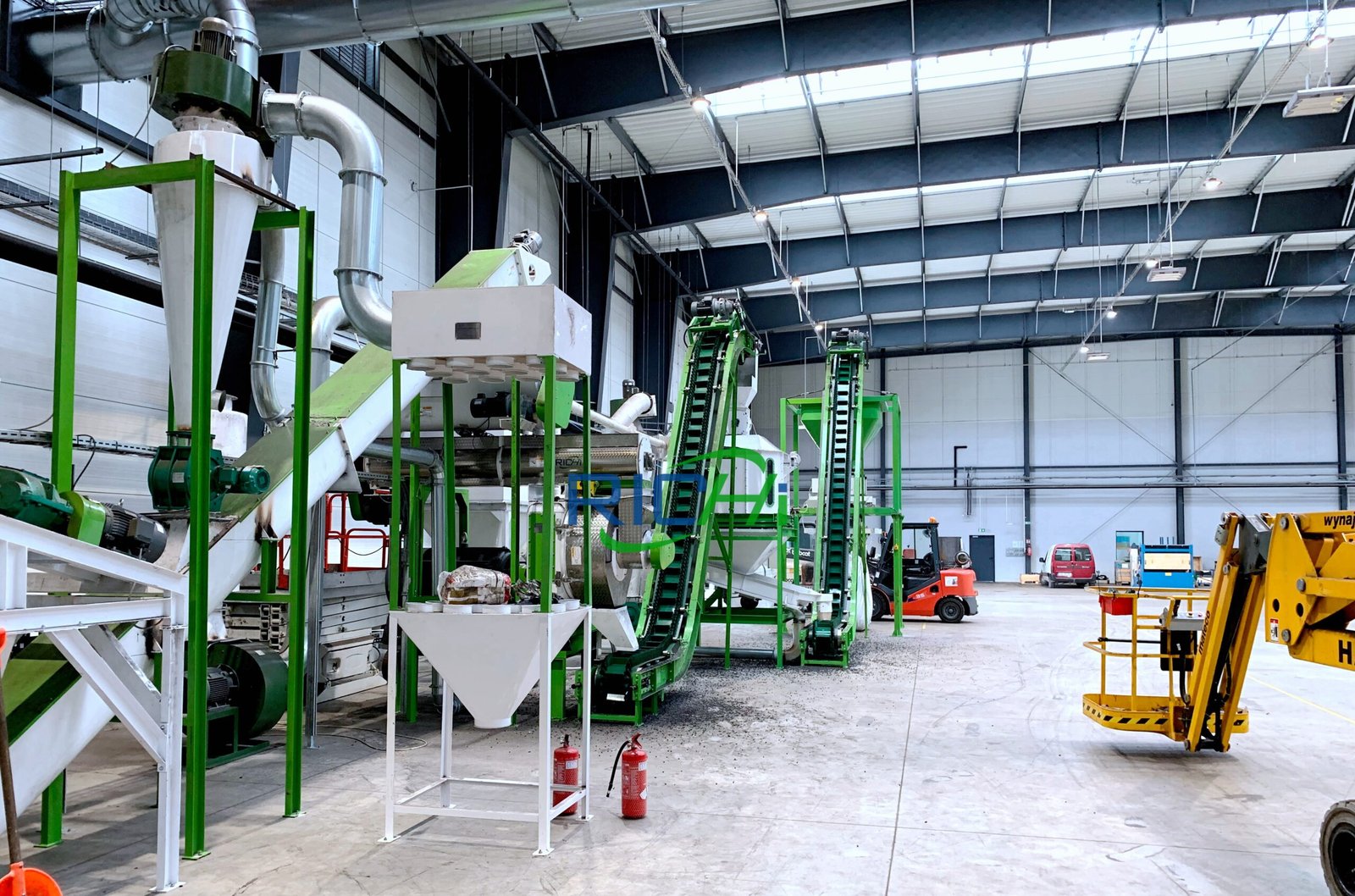
A 5 t/h pellet mill cannot produce 5 t/h of finished fertilizer if the crusher supplies only 3.5 t/h or the cooler and screen cannot handle the discharge. Before selecting the model, compare the usable capacity of every process stage on the same material and moisture basis. Include time for cleaning, recipe changes, and routine maintenance, not just nameplate output.
| Process Section | Illustrative Usable Capacity | Potential Constraint |
|---|---|---|
| Crusher | 4.0 t/h | Large clumps or wet material reduce throughput |
| Mixer and feeder | 4.5 t/h | Batch cycle and inconsistent bulk density |
| Pellet mill | 5.0 t/h | Formula and die conditions affect actual output |
| Cooler and screen | 4.0 t/h | Product temperature and fines load |
| Packing | 4.2 t/h | Bag size and changeover time |
In this example, the crusher, cooler and screen limit finished output to approximately 4 t/h even though the pellet mill is rated at 5 t/h. A design margin of around 10%–20% in selected auxiliary sections can be useful, but the required margin depends on material variability and operating schedule. The recommendation changes if the plant already owns a suitable crusher or has buffer storage that decouples upstream and downstream stages.
8. How to Select the Right Organic Fertilizer Pellet Machine
Start with four project facts: raw material, target hourly output, finished pellet diameter, and equipment already installed. Then confirm moisture, particle size, operating hours, site utilities, and packaging requirements. A compact plant may prioritize footprint and simple operation; a larger operation may need automatic batching, continuous feeding, multiple pellet mills, and integrated cooling and packing.
- Provide representative samples of each major raw material or blend.
- Measure moisture and particle-size distribution at the relevant process stages.
- Specify the finished pellet diameter and required product properties.
- Identify existing fermentation, crushing, drying, cooling and packing equipment.
- Request a process flow diagram, equipment list, motor list and plant layout.
- Confirm die specification, wear parts, safety devices, commissioning tests and spare-parts scope.
For detailed model specifications and a project-specific process proposal, review the RICHI organic fertilizer pellet machine range and technical configuration. The final recommendation should be based on representative material testing and the actual production target.
Conclusion
The right organic fertilizer pellet machine is the one that matches the prepared material and the factory’s complete process route. Manure, straw, sludge, rice husk and mixed residues create different requirements for fermentation, crushing, feeding, die selection, corrosion protection and drying. RICHI’s FZLH range provides options from 1 to 26 t/h, but the machine model is only one part of the decision. A successful project balances raw-material preparation, granulation, cooling, screening and packing so that the plant can consistently produce the fertilizer specification its market requires.
Frequently Asked Questions
What is the capacity range of RICHI organic fertilizer pellet machines?
The published FZLH model range covers approximately 1–26 t/h, from the FZLH250 at 1–1.5 t/h to the FZLH768 at 22–26 t/h. Actual output depends on material, moisture, particle size, pellet diameter and process configuration.
Which raw materials can be processed?
Prepared livestock and poultry manure, compost, straw, rice husks, oilseed cakes, mushroom substrate, biogas residue, sludge, vegetable waste and selected agro-industrial residues can be considered. Each requires a preparation route matched to moisture, fiber, particle size and binding properties.
Does manure need fermentation before pelletizing?
Many manure-based projects use solid-liquid separation where necessary, followed by composting or fermentation, crushing and moisture adjustment. Whether each stage is required depends on the incoming material and the finished fertilizer specification.
What pellet diameter can the FZLH machine produce?
The published product range lists finished pellet diameters of 4–12 mm. The die hole and compression ratio should be selected according to the formulation and the required fertilizer granule specification.
Does every organic fertilizer production line need a dryer?
No. The need for drying depends on incoming moisture, fermentation condition, granulation behavior and final product requirements. Measure moisture at each stage and size the dryer according to the actual water-removal duty.