

There’s a rhythm to dairy farming. Morning and evening, the cows come in. They eat. They produce milk. And they produce manure. It’s been that way for as long as cows have been domesticated. The manure has always been there, a constant companion to milk and meat production. For most of agricultural history, it’s been viewed as an unavoidable byproduct—something to be managed, spread, or hauled away.
But the cow doesn’t see it that way. To the cow, manure is simply the end point of digestion, the return of what wasn’t needed. There’s no judgment in it, no sense of waste. It’s just biology. And biology, when you look closely, is full of opportunities.
The manure the cow produces contains nitrogen, phosphorus, potassium, and organic matter—the same nutrients that plants need to grow. It’s not waste; it’s a resource in a form that happens to be inconvenient. Inconvenient, but not impossible. With the right approach, that inconvenience becomes a product that farmers and gardeners actively seek.
The Everyday Reality
If you’ve spent any time around a dairy operation, you know what the manure pile looks like. It grows steadily. It needs to be moved. It takes up space. There are regulations about where it can be stored and how it can be applied. The smell carries on certain days. It’s not something that most farmers look forward to dealing with.
The costs add up. There’s the labor to scrape the barns, the equipment to haul the manure, the fuel to run the spreaders. There are the regulatory requirements that may require expensive management plans. For many operations, manure management is one of the largest non-feed costs on the farm.
And yet, every bag of fertilizer that’s bought for crops represents nutrients that are already on the farm in the manure pile. The nitrogen that’s purchased in a bag is the same nitrogen that’s in the manure, just in a more concentrated and predictable form. The difference is convenience and consistency.
When Convenience Meets Opportunity
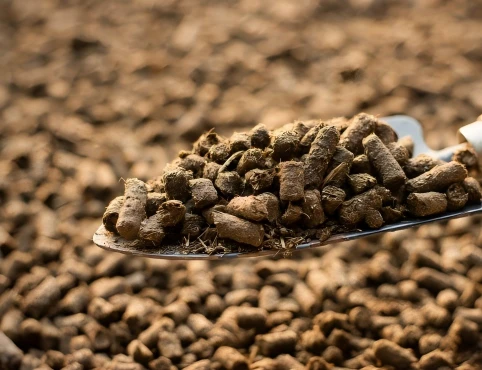
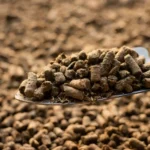
Processing manure changes the convenience equation. When the manure is dried, ground, and formed into pellets, it becomes a product that’s easy to handle, store, and apply. The same nutrients that were in the manure are still there, but now they’re in a form that can be transported economically and applied precisely.
The pellet form addresses the challenges that make raw manure difficult to market. The moisture is reduced from 80% to about 12%, eliminating the weight of water that makes hauling expensive. The particle size is uniform, allowing for consistent application. The pathogens and weed seeds are reduced by the heat of processing, making the product safer to handle.
For farmers who sell manure pellets, the market is growing. Organic growers need nutrient sources that meet certification standards. Vegetable producers and fruit growers seek slow-release fertilizers that match crop uptake patterns. Even conventional farmers are looking for ways to build soil organic matter and reduce reliance on synthetic fertilizers.
The Processing Approach
Transforming manure from a liability to a product follows a sequence of steps. Each step is straightforward, but each matters for the quality of the final product.
The first step is drying. Fresh manure contains too much moisture for pelleting. It must be reduced to about 12% to 15% moisture. This can be done mechanically using a dryer, which provides consistent results but consumes energy, or through natural drying, which takes more time but costs less.
The second step is grinding. Once the manure is dry, it needs to be ground to a uniform particle size. This ensures that it flows smoothly through the equipment and produces pellets of consistent quality. The grinding also breaks up any lumps that may have formed.
The third step is conditioning. The ground material is treated with steam, which softens the particles and activates the natural binders in the manure. This step is important for creating durable pellets that hold together during handling.
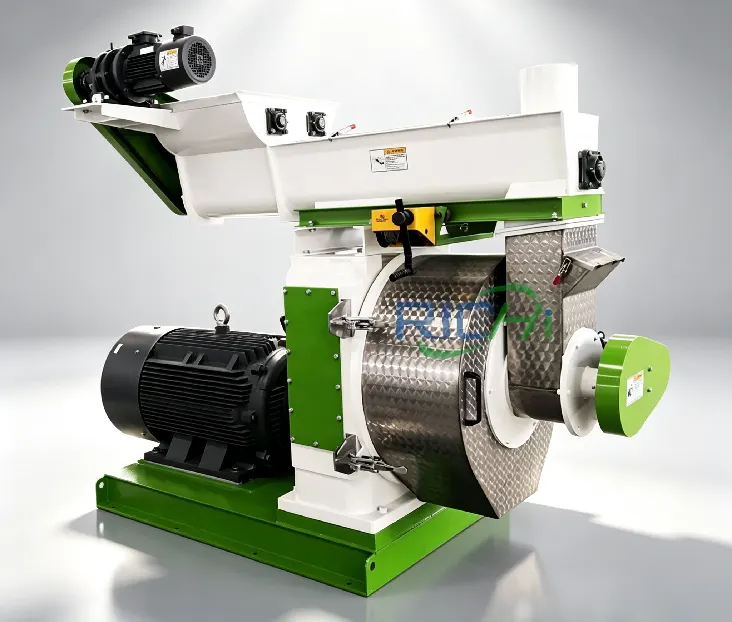
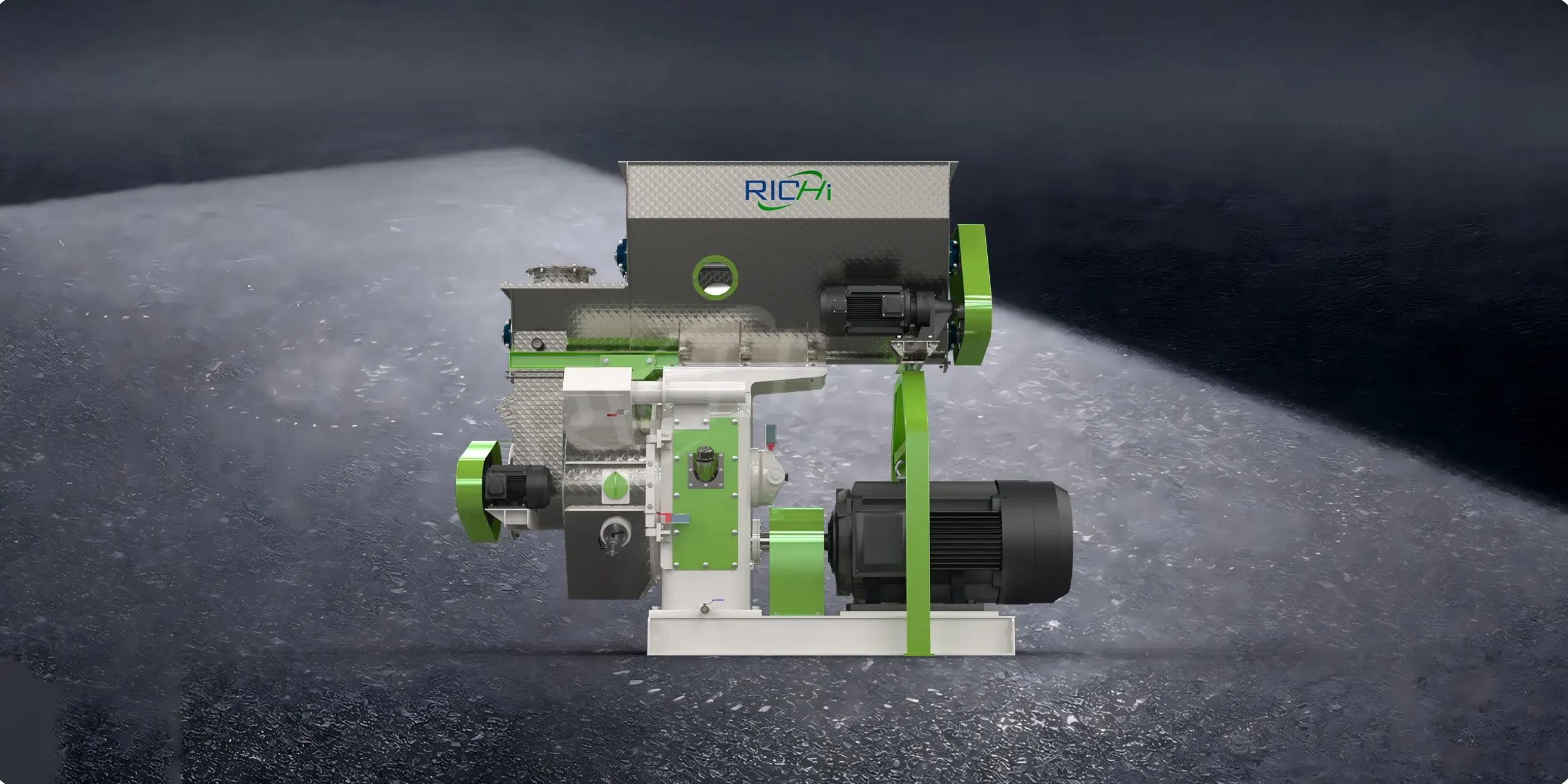
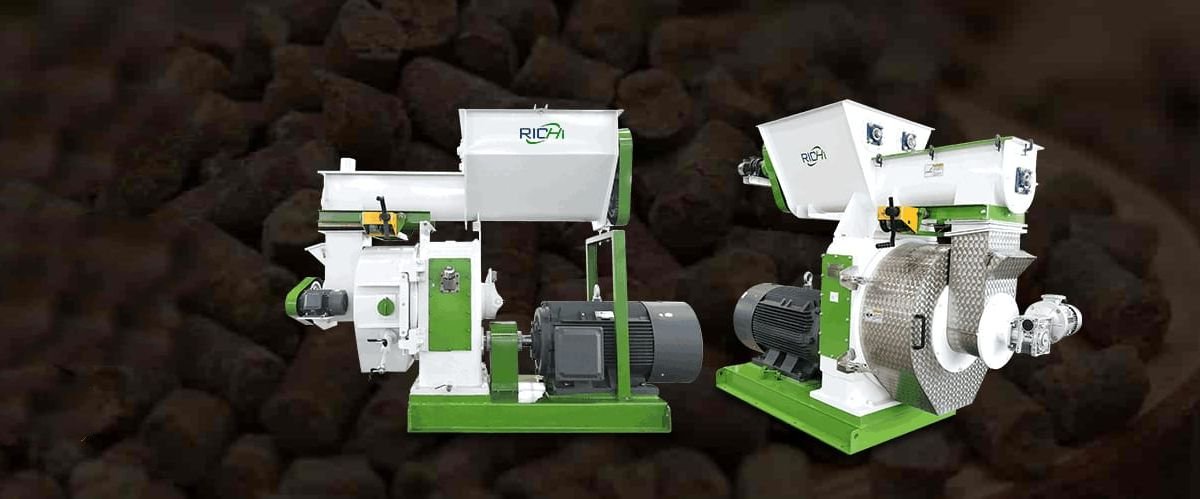
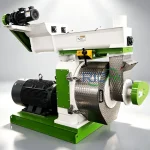
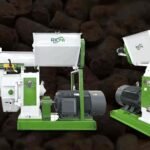
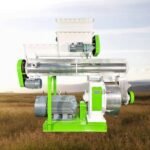
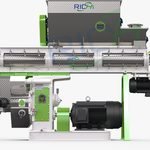
The fourth step is pelleting. The conditioned material is fed into a cow dung pellet making machine, where it’s compressed through a die to form dense, uniform pellets. The machine uses rollers to press the material through the die holes, generating heat that melts the natural binders and holds the pellets together.
The pellets emerge from the machine at high temperature and are then cooled. The cooling hardens the pellets and reduces the moisture content to a stable level. The pellets are then screened to remove fines, which are returned to the process.
The result is a consistent, durable product that can be stored, transported, and applied like any other fertilizer.
What the Equipment Does
A cow dung pellet making machine is specialized equipment designed to handle the characteristics of manure. The material is abrasive, so the machine must be built with wear-resistant components. The material can be variable in moisture content, so the machine must be capable of handling some variation without losing performance.
The die is the most important component of the pellet machine. It’s a metal ring with precision-drilled holes. The material is forced through these holes by rollers that press from inside the die. The die must be made from a wear-resistant alloy to withstand the abrasive nature of the manure.
The rollers are the other critical component. They press the material against the die. The gap between the rollers and the die must be precisely set. The roller bearings must be sealed to prevent contamination from the fine particles.
The motor provides the power for the compression. The motor must be sized for the load and the production capacity. The control system manages the feed rate and the process parameters, contributing to consistent pellet quality.
The Economics
For a dairy operation, the economics of manure processing depend on several factors. The volume of manure produced, the cost of alternative disposal, the capital cost of the equipment, and the market price for the finished pellets all matter.
The avoided costs are one side of the equation. If the farm is currently paying for hauling, or if it’s spending significant labor on manure handling, then processing can reduce those costs. The savings from avoided disposal can be substantial.
The revenue from pellet sales is the other side. The market for organic fertilizer is established and growing. The price depends on the nutrient content and the local market conditions. For many farms, the revenue from pellet sales covers the operating costs and contributes to the return on the equipment investment.
The payback period for a processing line varies with the scale of the operation. For a farm with a significant herd, the equipment typically pays for itself within a reasonable period. The savings and revenue continue for the life of the equipment.
A Full Production Setup
A pellet production line for manure includes more than just the pellet machine. The line includes the dryer, grinder, conditioner, cooler, and screener, along with the material handling equipment that moves the product between stages.
The dryer reduces the moisture content of the manure to the target range. The grinder reduces the particle size to a consistent level. The conditioner adds steam to prepare the material for pelleting. The pellet machine compresses the material through the die. The cooler reduces the temperature and moisture content of the finished pellets. The screener removes fines, which are returned to the process.
The line must be designed for efficient material flow. The equipment must be arranged to prevent bottlenecks. The control system must coordinate the operation of the different components.
The scale of the line depends on the volume of manure produced and the intended market. A line for a farm with a few hundred cows might produce a few hundred kilograms per hour. A commercial operation might produce several tons per hour.
A Different Perspective
The cow produces manure every day. It’s not something the cow thinks about. It’s just what happens. But the manure contains nutrients that plants need, organic matter that builds soil, and value that’s waiting to be captured.
For farmers who process their manure, the daily routine changes. The pile that used to be a problem becomes a steady supply of raw material. The equipment processes it, and the pellets go to customers who need them. The cow’s daily gift, once a burden, becomes something that contributes to the farm’s revenue.
have a peek at this website to explore equipment options and system configurations for manure processing. The technology is proven, and the benefits are clear. The cow will keep producing, and the opportunity will keep waiting.