

The feed industry is no longer what it was twenty years ago. Rising production costs, increasing demand for high-quality feed, and growing competition have transformed the way feed manufacturers operate. Today, companies that succeed are not necessarily those with the biggest factories, but those with the most flexible production systems and the ability to adapt quickly to changing markets.
Poultry farming, aquaculture, and livestock industries continue to expand across many countries. As a result, feed producers are looking for more efficient ways to maximize profits while maintaining consistent product quality. This is why investing in a poultry feed line has become an attractive option for both new entrepreneurs and established feed companies.
Why Is Feed Demand Increasing Worldwide?
Global demand for animal protein continues to rise every year. Consumers expect affordable meat, eggs, and fish products, which creates opportunities for commercial farming operations.
Several factors contribute to this growth:
- Population increases.
- Urbanization.
- Higher living standards.
- Expansion of intensive farming.
- Greater focus on animal nutrition.
Feed manufacturers play a vital role in supporting these industries by providing balanced and reliable feed products.
Flexibility Has Become More Important Than Capacity
In the past, many factories were designed to produce only one type of feed. However, changing market conditions require greater flexibility.
Modern feed facilities can manufacture:
- Broiler feed.
- Layer feed.
- Duck feed.
- Goose feed.
- Pig feed.
- Fish feed.
- Shrimp feed.
This flexibility allows producers to serve more customers and reduce business risks.
Instead of investing in multiple factories, many companies prefer modular production systems that can be upgraded in the future.
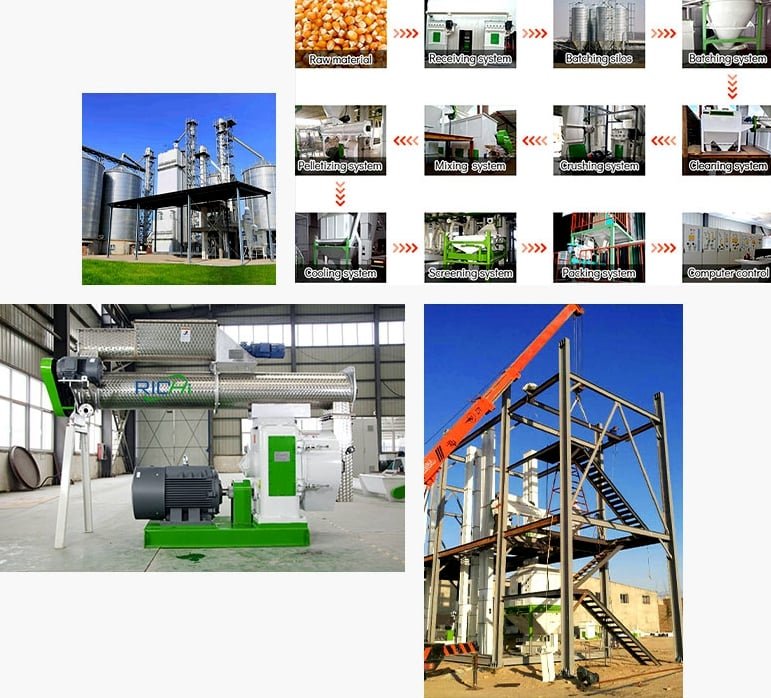
Understanding the Feed Production Process
Raw Material Receiving
Ingredients such as corn, soybean meal, wheat bran, and premixes are delivered and stored in dedicated bins.
Grinding
Hammer mills reduce particle size to improve digestibility and mixing efficiency.
Mixing
Precise mixing ensures uniform nutrient distribution.
Conditioning
Steam conditioning increases pellet quality and improves nutrient utilization.
Pelleting
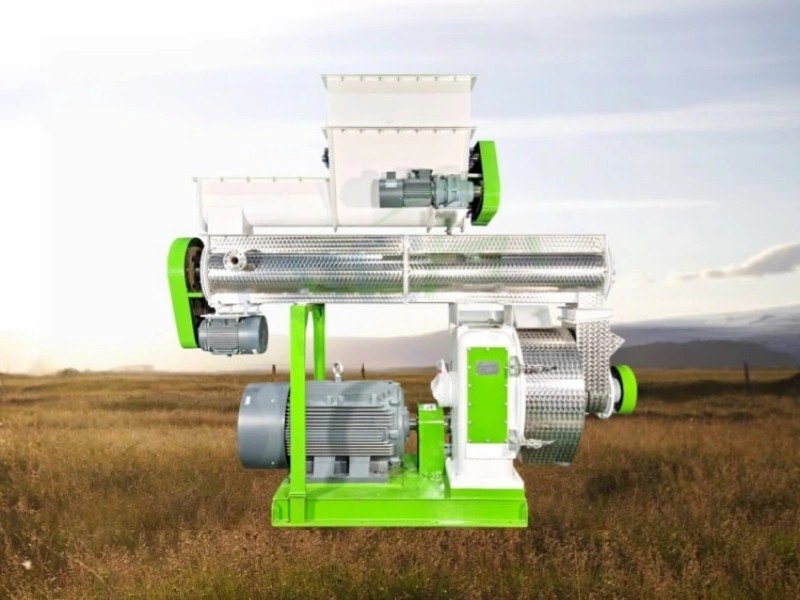
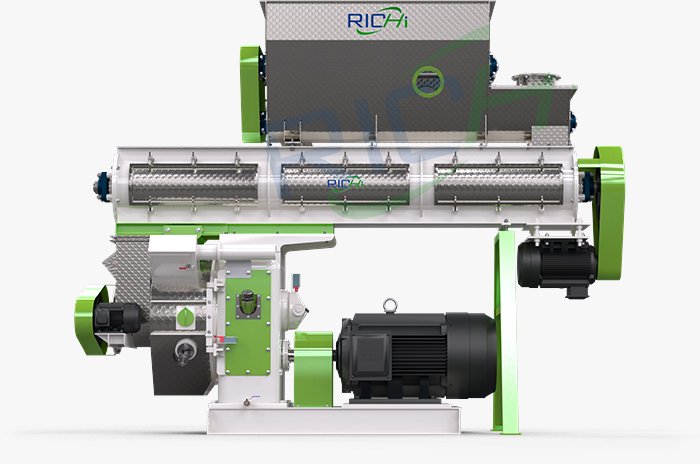
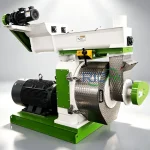
The pellet mill converts mixed ingredients into compact feed pellets.
Cooling
Cooling equipment removes excess heat and moisture.
Screening
Broken pellets and dust are separated.
Packaging
Automatic bagging systems improve productivity and reduce labor requirements.
Every stage affects the final quality of the feed.
Diversification Creates More Opportunities
Poultry feed remains a profitable market, but diversification can increase income and reduce risks.
Aquaculture has become one of the fastest-growing agricultural industries in the world. By adding a sinking fish feed pellet making machine, manufacturers can enter entirely new markets.
Products may include:
- Tilapia feed.
- Catfish feed.
- Carp feed.
- Shrimp feed.
- Ornamental fish feed.
Producing multiple feed types helps maintain stable business growth even when one market experiences fluctuations.
Why Automation Matters
Modern automation systems provide significant advantages.
Reduced Labor Costs
Automatic systems require fewer operators.
Better Accuracy
Computerized batching minimizes formulation errors.
Stable Production
Machines operate continuously with consistent quality.
Improved Data Collection
Production information can be stored and analyzed.
Automation helps manufacturers increase efficiency and lower operating costs.
Energy Efficiency Has Become Essential
Electricity expenses account for a large percentage of production costs.
Modern factories use:
- Variable frequency drives.
- High-efficiency motors.
- Intelligent control systems.
- Optimized cooling equipment.
These technologies reduce power consumption and improve profitability.
Over time, energy savings can represent a significant financial advantage.
What Should Investors Consider Before Buying Equipment?
Price should never be the only factor.
Important considerations include:
Engineering Experience
Experienced suppliers understand different feed formulas and production requirements.
Equipment Reliability
High-quality components improve service life.
Technical Support
Professional assistance simplifies installation and operation.
Spare Parts Availability
Fast delivery minimizes downtime.
Future Expansion
Modular designs make upgrades easier.
Many companies cooperate with Richi manufacture because comprehensive support is often more valuable than low equipment prices.
Smart Factories Are the Future
Digital technology is transforming feed manufacturing.
Emerging trends include:
Remote Monitoring
Managers can supervise equipment from anywhere.
Predictive Maintenance
Sensors identify problems before breakdowns occur.
Cloud Management
Production information becomes easier to manage.
Artificial Intelligence
AI systems help optimize operating efficiency.
Smart manufacturing improves competitiveness and lowers production costs.
Environmental Protection Is Becoming More Important
Governments and customers are paying greater attention to sustainability.
Modern feed factories use:
- Dust collection systems.
- Energy-saving motors.
- Noise reduction equipment.
- Waste recycling systems.
These solutions improve working conditions and reduce environmental impact.
Sustainable production also strengthens corporate reputation.
Common Mistakes New Investors Should Avoid
Buying Oversized Equipment
Large capacities may create unnecessary financial pressure.
Ignoring Raw Material Supply
Stable ingredients are essential for long-term success.
Purchasing Cheap Machines
Low-cost equipment often leads to expensive maintenance.
Neglecting Technical Training
Well-trained operators improve efficiency and reduce downtime.
Failing to Plan for Expansion
Future growth should always be considered during the design stage.
Avoiding these mistakes can significantly improve profitability.
Looking Ahead
The global feed industry will continue to evolve. Manufacturers that embrace flexibility, automation, and diversification will enjoy greater opportunities in the coming years.
A modern poultry feed linesll provides much more than simple feed production. It creates the foundation for sustainable growth and long-term competitiveness. By integrating intelligent technologies and diversified products, feed producers can build businesses capable of adapting to future challenges.
If you are researching equipment or planning a new project, you may check my source to discover more practical information, engineering solutions, and industry insights that support successful investments.
Related Post:https://pelletizerequipment.com/animal-feed-production-line/