




Straw pellet production looks attractive in agricultural regions because the raw material is often available close to farms.
But availability alone does not guarantee a profitable project.
A business may have access to thousands of tons of straw and still struggle if collection costs are too high, moisture varies significantly, or the finished pellets cannot reach a suitable market at a competitive price.
This means that a straw pellet project should start with resource analysis rather than machinery selection.
The first objective is to understand what material is available, when it becomes available, how it can be collected, and what form the final product should take.
Step One: Map the Raw Material Supply
Before purchasing equipment, project developers should investigate local agricultural production.
Important questions include:
- How much wheat is produced annually?
- How much straw is generated?
- How much can realistically be collected?
- What percentage is already used by farmers?
- How far are farms from the proposed factory?
- How does moisture change between harvest seasons?
- Is the supply available throughout the year?
These questions help determine whether the proposed production capacity is realistic.
A factory designed for 10 tons per hour may look attractive on paper, but if the region cannot supply enough prepared biomass, the equipment may remain underutilized.
Corn Stalks as a Regional Feedstock
Corn stalks can be an important biomass resource in areas with extensive corn cultivation.
However, the stalk is bulky and contains considerable fiber.
Collection systems may involve baling, chopping, or direct transportation depending on the farm structure.
Once the material reaches the plant, it may need further size reduction before drying and pelletizing.
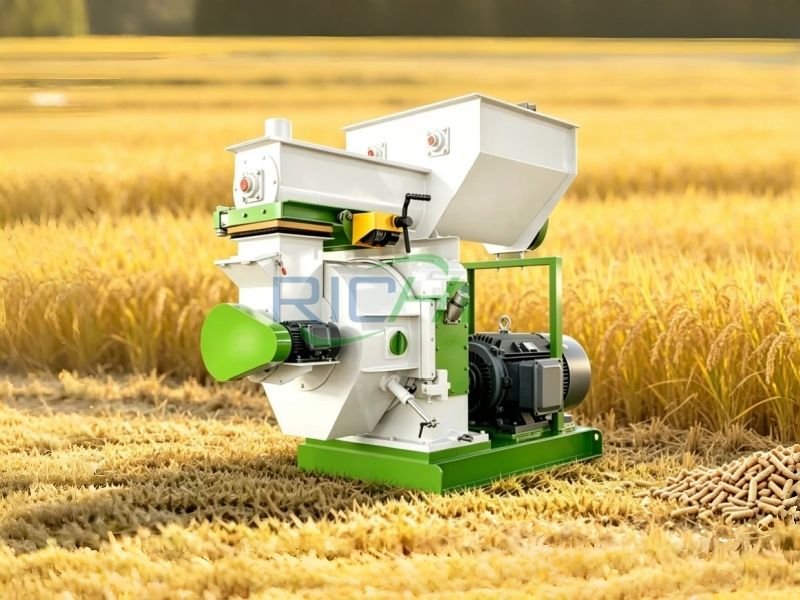
A suitable corn stalk pellet mill should therefore be selected alongside the upstream preparation equipment.
The complete process matters more than the pellet mill alone.
Why Wheat Straw Requires Proper Preparation
Wheat straw can be attractive because it is generated in large quantities across many farming regions.
But long straw fibers can create feeding challenges.
The material may need a cutter or crusher before entering a hammer mill.
If the material is too coarse, it can increase mechanical load and reduce pellet quality.
If it is excessively fine, grinding costs can rise.
The right preparation process is therefore a balance between machine performance, energy consumption, and pellet quality.
Capacity Should Be Based on Real Supply
Capacity planning should combine raw material availability with market demand.
Consider a project where local farms can provide enough straw for 4 tons per hour during the harvest season.
If the factory is designed for 8 tons per hour, it may only operate at full capacity for a limited period.
That does not necessarily make the project impossible, but the economic model must account for seasonal utilization.
A 2-3 T/H wheat straw pellet machine for sale may be more practical for a regional project if the available raw material and local fuel market are moderate.
The correct capacity is the one that balances supply, demand, operating hours, and investment.
Moisture Changes With the Weather
Weather can have a major impact on agricultural residue processing.
Straw collected immediately after unfavorable weather may contain much more moisture than material stored under dry conditions.
This creates production uncertainty.
A drying system provides a way to stabilize feedstock before pelletizing.
But drying itself consumes energy.
Therefore, project developers should evaluate whether natural drying, covered storage, mechanical drying, or a combination of methods is the most economical approach.
Choosing a Dryer
Dryer selection depends on:
- Raw material moisture.
- Required final moisture.
- Production capacity.
- Available heat source.
- Fuel cost.
- Workshop space.
- Material characteristics.
A rotary drum dryer may be appropriate for many medium- and large-scale biomass applications.
A belt dryer can be considered where lower-temperature drying or different material handling characteristics are preferred.
There is no universal dryer for every straw pellet project.
The Importance of Material Flow
A production line should move material smoothly.
Poor material flow can cause:
- Blockages
- Uneven feeding
- Excessive labor
- Production interruptions
- Increased maintenance
Conveyors, storage bins, feeders, and transfer points should therefore be considered during plant design.
The goal is to maintain a stable flow from raw material receiving through finished pellet packaging.
What Does a Corn Straw Pellet Machine Actually Need to Handle?
A commercial biomass pelletizer needs to deal with several variables simultaneously.
The material may vary in:
- Moisture
- Particle size
- Fiber length
- Bulk density
- Ash content
- Natural binding characteristics
This means machine performance depends on upstream preparation.
A well-prepared raw material can significantly improve pelletizing stability.
(Related Post: https://biomasspelletizer.com/rice-straw-pellet-machine/)
Pellet Diameter Should Follow the Market
The desired pellet diameter depends on the final customer.
Industrial boilers may accept a certain range of biomass pellet sizes.
Residential heating systems may have their own specifications.
Some agricultural users may purchase pellets for bedding rather than combustion.
Therefore, pellet diameter should be selected according to market demand.
Changing the die later may be possible, but it is better to define the main product specifications before commissioning the plant.
Cooling and Screening Complete the Process
Pelletizing is not the end of production.
The hot pellets need to be cooled.
After cooling, screening removes fines.
Only then should the material be packaged or transferred into bulk storage.
This sequence improves handling and reduces the possibility of moisture-related storage problems.
Why a Complete Production Line May Be Better
For projects involving variable straw quality, an integrated system can provide better process control.
A typical production line could include:
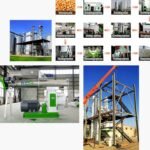
Raw material receiving → chopping → crushing → drying → pelletizing → cooling → screening → packaging.
Depending on the raw material, additional equipment may be necessary.
The important point is that each machine should support the next stage.
When Should You Choose a Larger Solution?
A larger system may make sense when:
- Raw material supply is highly reliable.
- The factory has long-term contracts.
- There is strong local or export demand.
- The plant operates multiple shifts.
- Storage facilities are sufficient.
- Logistics are well established.
Under these circumstances, a broader straw pellet production line solution can help coordinate several processing stages at a commercial scale.
However, expansion should follow verified demand rather than optimistic assumptions.
Logistics Can Make or Break the Business
Raw straw is relatively low in bulk density.
Transportation costs can therefore become significant.
A factory located far from farms may spend too much on raw material collection.
A factory located too far from customers may also face high finished-product transportation costs.
The best location often lies somewhere between major raw material sources and the target market.
The Role of Automation
As production grows, automation can reduce manual intervention.
Automatic feeding systems can maintain stable material flow.
Temperature sensors can monitor drying.
PLC systems can coordinate major machines.
Automatic packaging can reduce labor requirements.
However, automation should be selected according to the plant’s actual needs.
A small regional plant does not necessarily require the same control system as a large industrial factory.
How to Evaluate a Supplier
When comparing equipment suppliers, buyers should look beyond machine photographs.
Ask about:
- Raw material testing.
- Capacity under actual material conditions.
- Power consumption.
- Spare parts.
- Installation.
- Commissioning.
- Operator training.
- Warranty.
- Process design.
- Future expansion.
A supplier such as Richi manufacture may offer different configurations, but the final recommendation should always be based on the project’s actual material and production targets.
Turning Straw Into a Local Energy Resource
A successful straw pellet project can create value at several levels.
Farmers gain another use for agricultural residues.
Collectors gain new business opportunities.
Factories create local employment.
Energy users receive a standardized biomass fuel.
The agricultural sector becomes more connected with the renewable energy sector.
For companies researching the economics and technology of biomass utilization, look at this website for additional industry information.
Final Thoughts
A straw pellet project should not begin with the question, “Which pellet machine should we buy?”
A better starting point is:
“What resources do we have, what product can we sell, and what production scale can connect the two profitably?”
Once these questions are answered, equipment selection becomes much clearer.
The right combination of collection, storage, crushing, drying, pelletizing, cooling, and packaging can turn an agricultural residue problem into a practical energy business.